


Listen to the article
The white surface of the rocket, which stood still against the Florida sky, reflected sunlight in a way that seemed almost metaphorical, as though it simultaneously held patience and promise. Engineers meticulously simulated every second leading up to launch while keeping an eye on systems built to be incredibly dependable in harsh environments as they loaded super-cold hydrogen into its enormous tanks during the wet dress rehearsal.
When sensors picked up hydrogen leaking from a connecting point during that test, engineers had to halt the countdown and reevaluate. As a rocket fuel, hydrogen is extremely adaptable, but because its tiny molecules are easily escaped, containment is especially creative and requires accuracy, which, when done right, is remarkably successful.
By halting the procedure, NASA showed that even in situations where delays are inevitable, their culture is quite effective in protecting astronauts.
| Mission Name | Artemis II |
|---|---|
| Space Agency | NASA |
| Mission Objective | Send four astronauts on a 10-day crewed flight around the Moon and back |
| Spacecraft | Orion capsule atop Space Launch System (SLS) rocket |
| Latest Delay Cause | Hydrogen fuel leaks during wet dress rehearsal and technical adjustments |
| Additional Concern | Surge in powerful solar flares during peak solar cycle |
| Earliest Possible Launch Window | March–April 2026, subject to technical and environmental review |
| Strategic Importance | First crewed lunar mission since Apollo era, foundation for future Moon landings |
With the goal of bringing people back to the moon after more than 50 years, the Artemis II mission is still very significant to the crew. Astronauts can go farther from Earth than any crew in generations because to their spacecraft, Orion, which is incredibly resilient and built to sustain life for ten days.
NASA has strengthened confidence in the mission’s future success by creating a vehicle with highly reliable sophisticated life-support systems.
Scientists are paying close attention to the radiation bursts that the Sun is emitting as it enters an active phase. Planning for human spaceflight benefits greatly from preparation because solar flares, which are created when magnetic energy abruptly releases from the Sun’s surface, can interfere with communications and increase radiation exposure.
Engineers are now able to follow solar activity with very clear accuracy thanks to the huge speed increase in monitoring technologies over the last ten years.
Instead of retreating, mission planners should make more informed preparations in light of this solar activity. NASA has significantly enhanced its radiation shielding and operating strategies by utilizing decades of research, guaranteeing that astronauts are protected even in the face of difficult circumstances.
The way seasoned sailors wait for good winds, knowing that patience frequently results in safer and more successful travels, is remarkably comparable to this preparation.
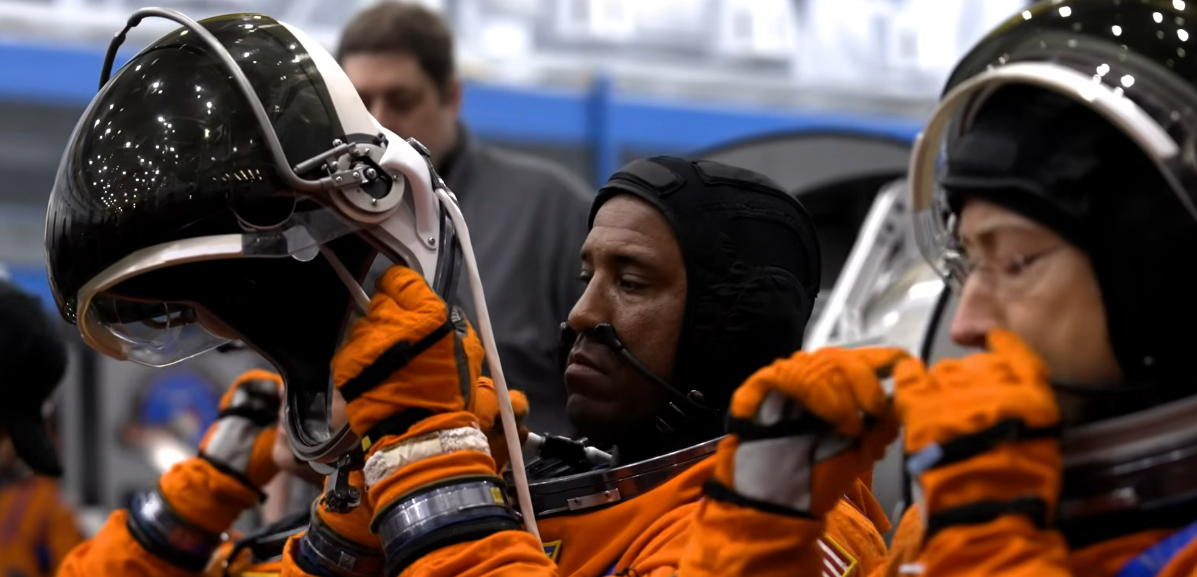
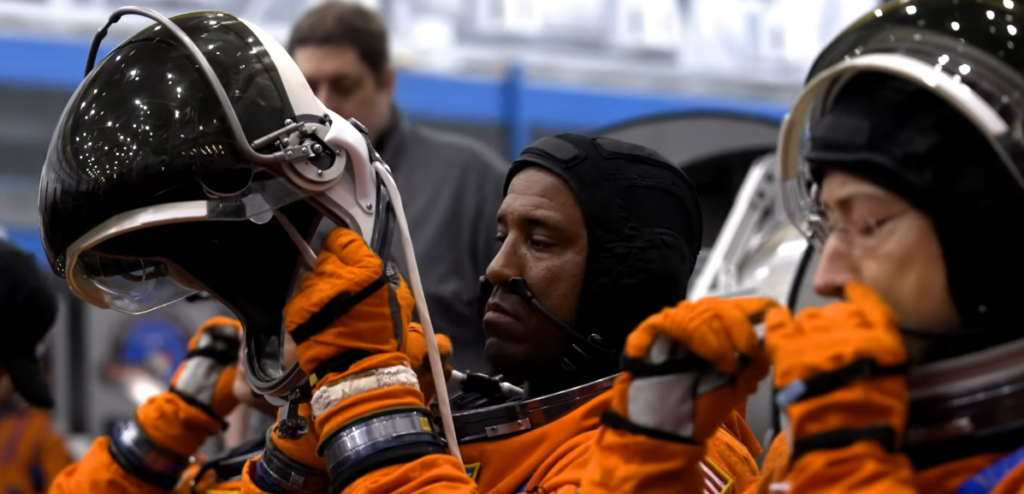
Astronauts continue to practice emergency situations during training sessions in simulators that provide an impressively realistic representation of Orion’s interior. By simplifying procedures and boosting self-assurance, these simulations enable crews to react composedly to unforeseen circumstances while strengthening routines that prove amazingly successful in actual missions.
The crew turns uncertainty into readiness through methodical planning.
Years ago, I witnessed a launch rehearsal and observed that the team’s commitment seemed to be strengthened rather than weakened by even the slightest delay.
Engineers are demonstrating a mindset that prioritizes quality over time by carrying out extra inspections to make sure every seal, valve, and system operates precisely as intended. Compared to previous space programs, this cautious approach has drastically decreased risks, indicating exceptionally creative and optimistic results.
Future missions are made possible and more reliable by this attention to detail.
More than just a single flight, the Artemis program lays the groundwork for ongoing exploration beyond of Earth’s orbit. By incorporating new technology, NASA is producing performance that is much faster and more capable than previous lunar programs, while also developing capabilities that are surprisingly economical.
Decades of education have led to this transformation, which turns aspiration into real-world success.
Despite its strength, solar activity also presents important chances for scientific advancement. Through the study of these eruptions, scientists are able to develop more robust and deep-space-ready systems by improving operational planning and spacecraft design.
Each expedition is more informed than the last because to these discoveries, which increase knowledge and improve preparedness.
Kennedy Space Center engineers view every delay as a step forward rather than a setback, demonstrating an incredibly successful dedication to safety. Their efforts, which combine technical expertise with careful observation, guarantee that Artemis II will launch with assurance based on planning rather than just wishful thinking.
Throughout NASA’s current programs, this strategy has significantly increased mission reliability.