



Listen to the article
Last summer, standing on a rocky overlook in northern Pakistan, a routine ritual occurred almost without conscious thought. Phones came out of pockets. The screens came to life. The same disappointment then surfaced almost instantly: “No Service.” As though altitude might persuade the network to cooperate, someone held their phone higher. It didn’t. Such moments continue to delineate the imperceptible boundaries of contemporary existence.
Apple Inc. appears intent on completely erasing that experience.
The iPhone 14’s Emergency SOS marked the modest start of the company’s quiet push into satellite connectivity in 2022. It was awkward but helpful. In order to watch as tiny messages crawled upward into orbit, users had to hold their phones toward the sky. It was more like improvisation than the future. Nevertheless, it was successful. They rescued hikers who were stuck in isolated places. Help is dispatched to drivers whose vehicles have broken down. And a significant change occurred.
| Category | Details |
|---|---|
| Company | Apple Inc. |
| Feature | Satellite-based connectivity for iPhone |
| First Introduced | Emergency SOS via Satellite (2022) |
| Expected Upgrade | Full satellite 5G connectivity |
| Target Timeline | Around 2026–2027 |
| Key Technology | NR-NTN (Non-Terrestrial Network) |
| Satellite Partner | Globalstar |
| Possible Future Partner | SpaceX |
| Reference | https://www.apple.com |
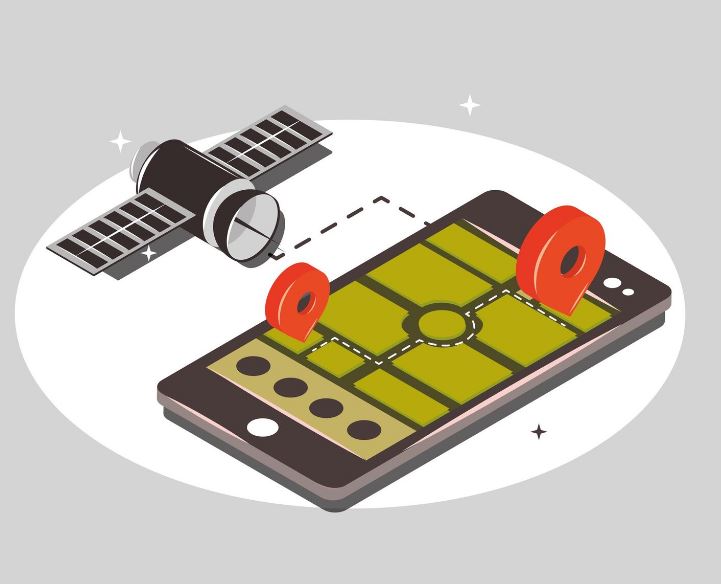
According to reports, engineers at Apple are now aiming for something much more ambitious: integrating satellites into the regular network of the iPhone. Future gadgets might connect automatically by 2027, alternating between satellites and cellular towers without users even realizing it.
Apple appears to be aiming for invisible connectivity.
Non-terrestrial network 5G technology, which enables satellites to deliver faster speeds than previous satellite messaging ever could, is the foundation of this next phase. Users may eventually be able to browse maps, send pictures, or even make calls from previously inaccessible locations in addition to sending emergency texts.
The ramifications seem both realistic and oddly sentimental.
There has always been a certain symbolism associated with dead zones: mountain trails where people abruptly lose contact with the outside world, rural towns where calls end in the middle of sentences, and highway sections where maps stop loading. People are forced to face loneliness head-on when their signal is lost. If Apple’s plan is successful, that boundary could be subtly erased.
The degree of seamlessness of the experience is still unknown, though.
Globalstar, a smaller satellite provider with deteriorating infrastructure, is a major supplier of Apple’s current satellite services. According to some analysts, Apple will require more partners in order to provide dependable worldwide coverage. Although neither company has officially confirmed a complete integration, rumors of cooperation with SpaceX and its Starlink network continue to surface.
There is a tinge of uneasiness as the telecom sector responds.
Towers, coverage maps, and roaming fees were the main pillars of traditional carriers’ business models. In some circumstances, satellite-enabled phones may defy that reasoning and enable users to completely avoid local networks. Despite their cautious optimism, investors appear to be concerned about potential changes in revenue structures.
Apple’s approach seems to be characterized by patience.
Rather than releasing a fully functional satellite phone right away, the company has been adding features bit by bit. First came the emergency SOS. Next, roadside assistance. Then limited texting via satellite. Every step felt experimental, revealing technical limitations while boosting confidence. For example, battery life is still an issue. Compared to conventional cell towers, satellites need more power to maintain steady connections because they orbit hundreds of miles above the ground.
The issue of cost is another.
Apple has so far provided its basic satellite features at no cost, despite the high cost of satellite infrastructure. Future iterations might have subscription costs, though Apple hasn’t made that announcement in public. If that occurs, customers might encounter a well-known conundrum: paying more for convenience they previously thought was provided.
There might be demand, though.
Evident users include emergency responders, hikers, travelers, and remote workers. However, even city dwellers may gain. Unbeknownst to most, cellular networks frequently malfunction during major events, natural disasters, or infrastructure outages. Redundancy is provided by satellites, a silent backup system that hovers above.
It’s simple to observe how reliant people have become on constant connectivity when strolling through airports. Messages, ride-hailing apps, and boarding passes all depend on signal strength. Visible annoyance is caused by even short outages.
Apple appears to have a deep understanding of that dependence.
Eliminating dead zones might not be its only long-term objective. It might completely redefine the meaning of “coverage.”
It’s thought that signal bars themselves may eventually vanish. It’s possible that phones will always be connected, and users won’t even consider towers or satellites.
However, technology rarely goes as planned.
Satellite networks might continue to operate at slower speeds than terrestrial ones. Signal interference may still occur in urban settings. Deployment in some nations may be delayed by regulatory obstacles. Additionally, rivals like Samsung and Huawei are working on related technologies.
There are no guarantees.
However, a fundamental shift has already occurred.
For many years, physical infrastructure, such as towers, cables, and switches, was necessary for connectivity. Apple’s aspirations for satellites elevate that infrastructure into the sky, making it more difficult to notice and more likely to be taken for granted.
It’s odd to think about a future in which phones just don’t work while standing in locations where they once did.
Dead zones may not remain silent indefinitely.