

Listen to the article
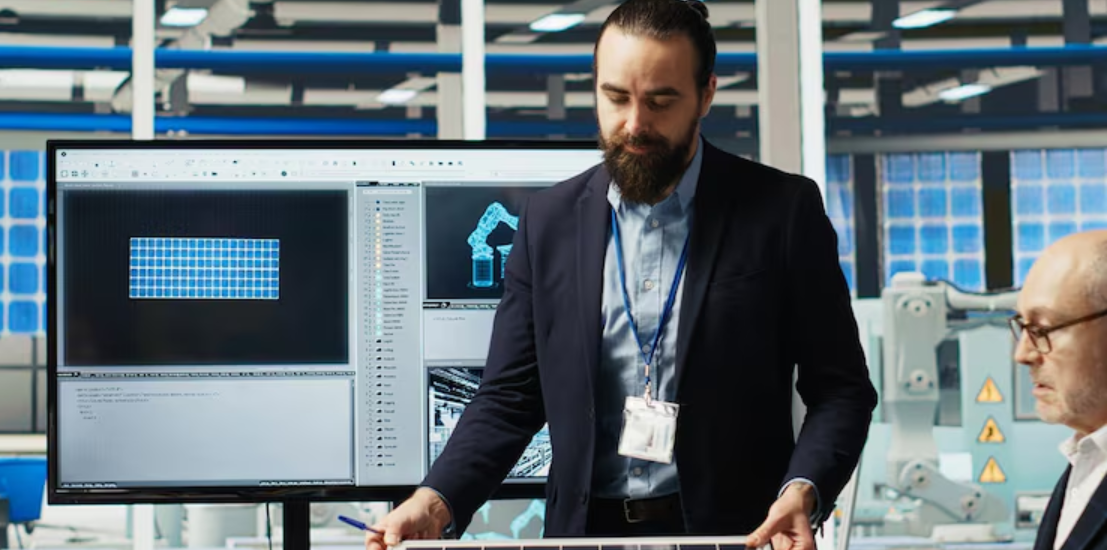
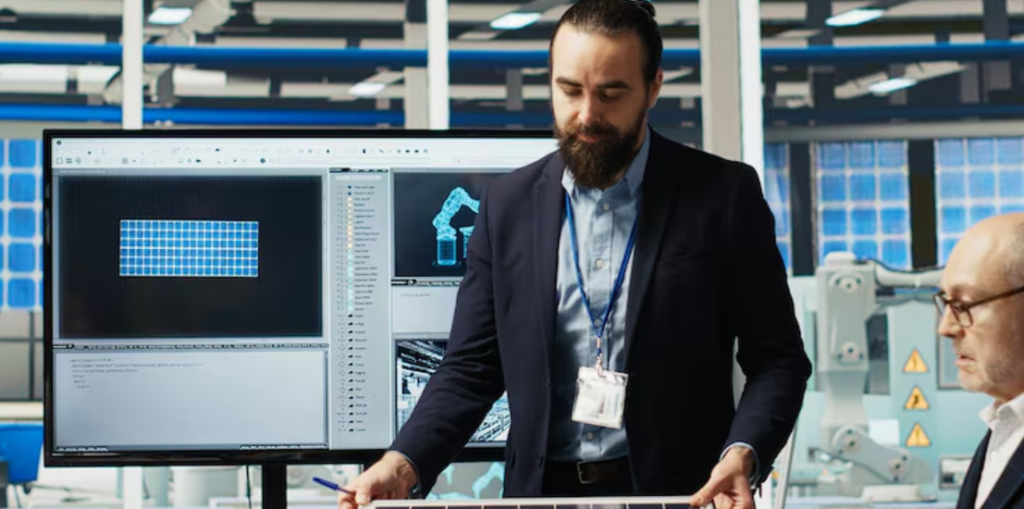
The unglamorous appearance of Volthara’s lab in Dubai Silicon Oasis is the first thing you notice when you walk in. Neon-lit screens and sweeping views of robots welding cells are absent. Just a row of test rigs humming softly behind tempered glass, a long hallway, and fluorescent lighting. There is a partially damaged coffee maker in the corner. You are asked to sign in twice by the receptionist.
Nevertheless, the company is now announcing to the world that it has developed a battery cell with an energy density of about 1,000 watt-hours per kilogram, which is about four times more than what powers the typical Tesla today. If accurate, this figure would require a recalculation by all automakers, aircraft engineers, and grid planners. Additionally, it’s a number that people in this field typically greet with a raised eyebrow. Seldom do battery claims make it from the lab bench to the assembly line.
| Information | Details |
|---|---|
| Company Name | Volthara Energy Systems |
| Headquarters | Dubai, United Arab Emirates |
| Founded | 2021 |
| Founders | Dr. Reem Al Mansouri, Karim Haddad |
| Sector | Advanced Battery Chemistry, Energy Storage |
| Claimed Energy Density | Approx. 980 Wh/kg |
| Target Applications | Aviation, Heavy Mobility, Grid Backup |
| Prototype Delivery Window | 2026 |
| Commercial Rollout | 2028 (planned) |
| Strategic Partner | BEEAH Group, Sharjah |
| Funding Raised | $74 million (Series B, late 2025) |
| Workforce | 142 employees, mostly chemistry and materials PhDs |
However, this place feels different in some way. The founders of Volthara are not your typical suspects. After completing his training at Imperial College, Dr. Reem Al Mansouri worked for a Japanese chemical company for nearly ten years. Karim Haddad’s background was in aerospace rather than consumer technology. With a modest grant from a fund connected to Mubadala and a desire to pursue chemistries that the major players had written off, they quietly founded the business in 2021. variations in sodium. hybrids of lithium and sulfur. They refer to it as a “molten interlayer” architecture, but they are not yet prepared to provide a detailed explanation.
Speaking with people in the broader industry, it seems that timing is just as important as technology. Last year, CATL of China revealed its own 500 Wh/kg cell. Similar figures have been pushed for aviation by Wright Electric in Los Angeles. The competition now focuses on producing the lightest, safest, and most thermally stable batteries rather than just making batteries. The prize is aviation, but mining, agriculture, and defense are also interested.
It appears that investors think Volthara has something genuine. Strategic backers from Korea and Europe reportedly oversubscribed the Series B, which closed swiftly. It remains to be seen if the cell can be produced consistently and on a large scale. Numerous ground-breaking announcements in battery history have died somewhere between the press release and the manufacturing line. On paper, the majority of them appeared promising.
The intriguing thing about Dubai’s role in all of this is that the UAE has been setting the foundation without anyone really realizing it. A massive battery recycling facility in Sharjah, which is anticipated to process about 1,500 tonnes of lithium-ion batteries by 2026, is being developed by the Ministry of Energy and Infrastructure in collaboration with BEEAH and India’s LOHUM. Infrastructure of that kind is important. If you have nowhere to store the dead batteries, you cannot claim to be at the forefront of battery technology.
It’s also difficult to ignore the symbolism. A nation that was founded on oil is now financing the chemistry that could take its place. Although officials don’t explicitly state it, the plan is fairly obvious. The government has been busy planting flags throughout the whole battery value chain, including manufacturing, recycling, second-life storage, and now potentially breakthrough cells. By 2050, half of all vehicles in the UAE are expected to be electric.
It’s still unclear if Volthara will deliver. The prototype window for 2026 is limited. Opponents will point out that the team is still small and that thermal management at these energy densities is harsh. Supporters will point to the chemistry papers that are gradually coming out of the lab and the unusual quiet from rivals who typically jump to conclusions.
You get the impression that Dubai isn’t just hosting another startup as you watch this develop. In a world that hasn’t quite figured out where its next batteries will come from, it’s trying out for a much bigger role.