

Listen to the article
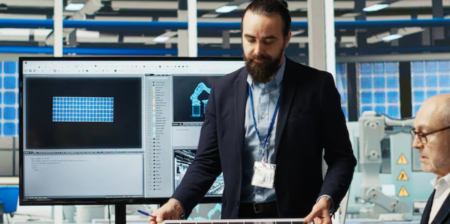
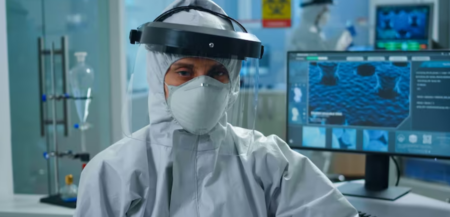
The soft hum of computers is nearly constant in a well-lit research lab in Abu Dhabi. Medical scans, which are grayscale pictures of tissue patterns that anyone outside of oncology would find mysterious, glow on screens. Radiologists may have studied each of these pictures for several minutes a few years ago. A machine can now identify possible cancer in less than 30 seconds in some experimental systems.
Researchers in the United Arab Emirates claim to have created an artificial intelligence tool that can analyze medical images remarkably quickly and identify some types of cancer in less than 30 seconds. Reducing the lengthy wait times between medical scans and diagnosis is the clear promise. However, the reality is a little more intricate—and possibly more fascinating—than many medical technological innovations.
| Category | Details |
|---|---|
| Innovation | AI-powered cancer detection system |
| Developed In | United Arab Emirates |
| Key Institutions | UAE universities and medical research centers |
| Technology | Artificial intelligence medical imaging analysis |
| Detection Speed | Under 30 seconds |
| Accuracy Range | Reported 90%+ in various screening trials |
| Primary Use | Early detection through medical scans and biomarkers |
| Healthcare Focus | Oncology and early disease screening |
| National Strategy | UAE National AI Strategy 2031 |
| Reference | https://www.mohap.gov.ae |
One of the most important aspects of cancer survival is still early detection. For decades, medical professionals have been aware of this. The logistics of detecting subtle tumors early enough has always been the issue, not awareness. Every week, radiologists frequently examine thousands of images. The task is challenging due to fatigue, time constraints, and the sheer complexity of the data. AI then stealthily enters the space.
Machine learning models trained on large medical datasets are used in the system under test in the United Arab Emirates. The software learns to identify patterns that point to early-stage cancer by analyzing hundreds of thousands of previous scans. Human physicians can see some of those patterns. Others are so subtle that, at first glance, they might seem like typical tissue variations.
It can be oddly depressing to watch the system operate. It uploads a scan. For a moment, a progress bar appears. A few seconds later, the software uses vivid colors to draw attention to suspicious areas throughout the picture. Digital processing condenses what could have taken a radiologist several minutes into a single blink.
Doctors are still wary, though. Promising technologies in medicine have come and gone, and diagnostic instruments must pass stringent testing before being widely used in hospitals. AI is frequently meant to support physicians rather than take their place—basically, serving as a second set of eyes.
This research is taking place in the United Arab Emirates for a reason. The nation has made significant investments in artificial intelligence over the last ten years in a variety of sectors, including healthcare and transportation. One of the top priorities in the UAE National AI Strategy 2031 is medicine. AI-assisted radiology systems are already being tested by hospitals in places like Dubai and Abu Dhabi, incorporating algorithms into routine clinical procedures.
This goal is reflected in the surroundings of these research facilities. As you stroll around some Abu Dhabi university campuses, you can see students carrying molecular biology textbooks and laptops loaded with code as they move between engineering labs and medical departments. It’s a strange combination of disciplines, but it might be essential. These days, data science is just as important to cancer detection as microscopes.
Combining genetic analysis and imaging is one of the most promising projects. Systems that look at biological markers in blood or tissue samples in addition to scans are being investigated by researchers. Theoretically, an AI model could simultaneously evaluate several types of medical data and find early warning indicators long before symptoms manifest.
There are indications that this strategy might be effective. When evaluating mammograms and other diagnostic images, some experimental algorithms have already demonstrated accuracy rates exceeding 90%. AI-assisted screening has even found cancers that human radiologists first overlooked in trials conducted around the globe. Although promising, those findings are still being closely examined.
It’s difficult to ignore how rapidly expectations are changing as technology advances. The notion that a computer could evaluate medical scans more quickly than a qualified specialist seemed futuristic ten years ago. The topic of discussion today is how to incorporate AI into hospital systems in a way that doesn’t overburden physicians or patients.
If the technology turns out to be dependable, the advantages could be substantial. Faster analysis allows physicians to examine more cases daily, which may shorten patient wait times. Additionally, it aids in addressing a silent healthcare issue: the lack of radiologists in many parts of the world. AI systems could help overworked specialists by prioritizing urgent cases and letting human experts make the final decisions.
However, there are still uncertainties. Errors can occur in algorithms. Biases may exist in medical data. Before authorizing widespread use, regulators will probably require substantial validation. Additionally, even if the technology is flawless, doctors must accurately interpret the results.
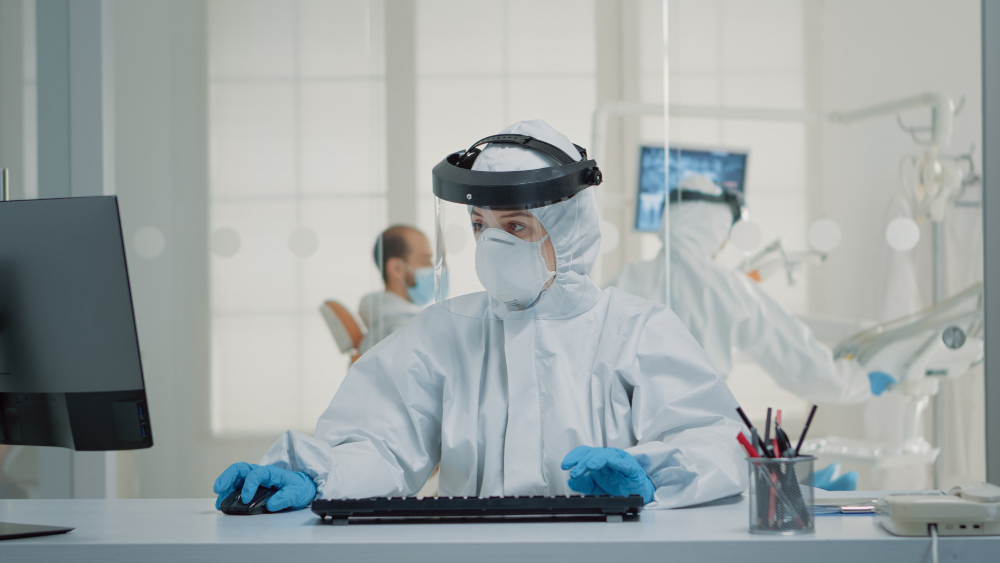
Nevertheless, there is a subtle transformative quality to the scene in those research labs. Clinicians arguing over the significance of highlighted patterns, researchers comparing scan images, lines of code scrolling across screens. It’s a bizarre nexus between computer science and medicine that doesn’t resemble the dramatic imagery that most people associate with cancer research.
The time itself—30 seconds—may be the most striking detail. Minutes can seem like hours to patients who are waiting tensely after a medical test. The experience of receiving a diagnosis may alter in ways that statistics alone are unable to fully convey if technology eventually reduces that waiting time to something closer to a few seconds.
As these experiments progress, it seems as though healthcare is about to enter a new era in which algorithms work silently next to physicians, scanning images more quickly than the human eye could, looking for even the tiniest hints that could save a life.