

Listen to the article
Most travelers never take the time to look twice at a certain landscape on the road north of Riyadh. Beige, flat, and hot enough at noon to crush ambition. No longer. Today, as you drive along that same stretch, you’ll come across fields of dark photovoltaic panels that are angled toward the sky and spread out like circuit boards across the desert. With a sort of quiet stubbornness, the Kingdom that built its modern economy on oil is now constructing something else on top of it. Even those who were closely observing were taken aback by the speed.
The majority of the story is revealed by the simple numbers. In 2016, Saudi Arabia had virtually no installed renewable capacity; by 2025, it had about 64 gigawatts. 38.7 GW of the 57.5 GW that the Ministry of Energy has tendered for 64 projects have already been given to developers. Approximately SAR 93 billion, or $24.8 billion, has been committed to power purchase agreements thus far. By 2030, 50% of electricity will come from renewable sources, with a total capacity of 130 GW, supported by the National Renewable Energy Program. Additionally, there is a Net Zero target for 2060, which now sounds more like a schedule than an aspiration.
| Key Information | Details |
|---|---|
| Country | Kingdom of Saudi Arabia |
| Strategic framework | Vision 2030, now entering its third and final phase |
| Lead institution | Ministry of Energy and ACWA Power |
| Renewable capacity (end of 2025) | 64 GW, up from effectively zero in 2016 |
| Capacity tendered to date | 57.5 GW across 64 projects |
| Capacity already awarded | 38.7 GW, signaling strong investor appetite |
| Investment commitment in PPAs | Roughly SAR 93 billion (~$24.8 billion) |
| Total clean energy investment plan by 2030 | Around $235 billion |
| 2030 renewable electricity target | 50% of the grid, capacity goal of 130 GW |
| Storage tendered / online | 30 GWh tendered, 8 GWh already grid-connected |
| Notable project | Sakaka PV IPP (300 MW), the Kingdom’s first large utility-scale solar plant |
| Long-term commitment | Net Zero by 2060 |
Sakaka, a 300 MW utility-scale solar plant in Al Jouf that went online in late 2019, was the first project to make headlines. It was the Kingdom’s first real test of whether it could go beyond press releases and truly build at scale, and it was created by ACWA Power. Since then, over 10.2 GW have been connected, and about 33 GW are being developed. In 2016, the Ministry’s proposal to tender 20 GW of renewable energy per year would have seemed absurd. This is a “take-off phase,” according to UNDP, which has been collaborating with the Ministry of Energy for more than 15 years. That seems about correct.
The reasoning behind this is what makes it intriguing and a little unsettling for conventional energy markets. The demand for electricity in Saudi Arabia has been rapidly increasing, and burning crude or heavy fuel oil to produce electricity has always been an odd use of the Kingdom’s most valuable export. In essence, each kilowatt-hour produced by solar power rather than liquid fuels frees up a barrel for export. This is a sophisticated economic argument that works without the need for climate idealism. More oil for sale abroad; cheaper, cleaner electricity at home. More than any green commitment, it’s possible that the math is what’s really driving this.
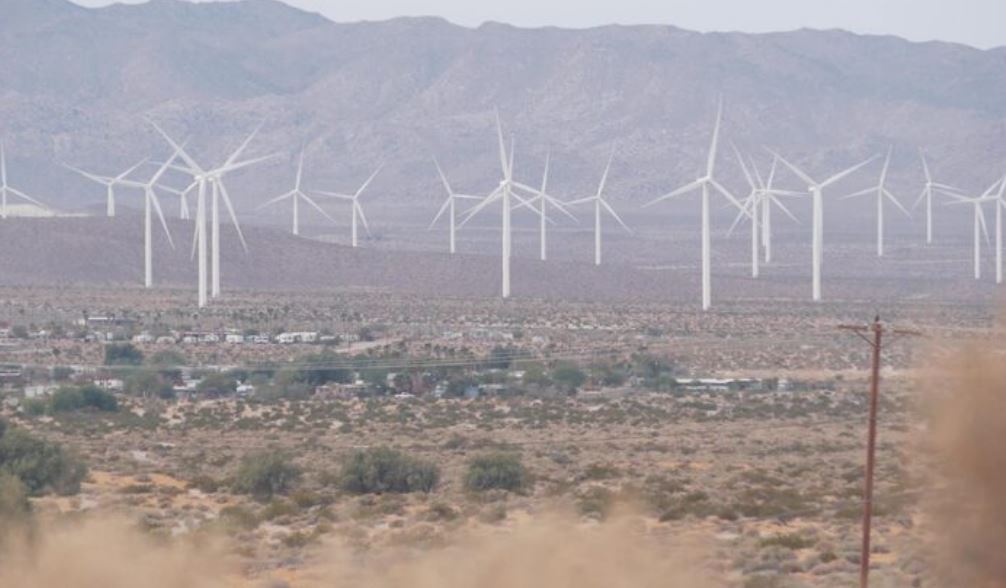
The story becomes more plausible in storage. Without having to repeat someone else’s error, Saudi Arabia appears to have learned that a grid powered by sporadic solar power without batteries is brittle. Eight GWh of the approximately 30 GWh of energy storage that have been tendered are already connected to the grid. By 2030, the nation wants to have 48 GWh of storage. In order to map wind and solar patterns in detail, 1,200 meteorological masts—the kind of unglamorous infrastructure that lowers the cost of capital years later—are being deployed over an area of about 850,000 square kilometers. It’s difficult to ignore the fact that this is being done methodically rather than theatrically.
There is still reason for skepticism. The initial 2016 renewables figure of 9.5 GW was only significantly increased after it became evident that the early plan was too modest. Vision 2030 had ambitious targets that had previously slipped. Grid build-out, supply chains, funding, and an uneasy regional security environment all play a role in whether the 130 GW target is met on time. 93% of Vision 2030 indicators met or nearly met their annual targets, according to the Council of Economic and Development Affairs. This is impressive on paper, but the challenging part is the third phase, which runs from 2026 to 2030. The simpler victories have already been won.
Nevertheless, there’s something odd about seeing this play out. In actuality, the nation most closely linked to the carbon economy is implementing solar energy more quickly than any other country in history. Plans to export green hydrogen are already being developed, in part to power AI data centers and decarbonize European industry. The Kingdom seems to be attempting to protect itself from the very change it once opposed, and it is doing so with the patience of a long-term planner rather than the urgency of a latecomer. It remains to be seen if the world recognizes Saudi Arabia in time to update its mental model.