





Listen to the article
Watch what happens when the card reader malfunctions while standing at the counter of practically any coffee shop in a large American city. A brief yet noticeable halt occurs. A line is formed. People glance at one another, check their phones, and then, occasionally with genuine surprise, someone takes out a twenty-dollar cash from a pocket, and the queue resumes. Repeated in restaurants, supermarkets, and farmers’ markets across the nation, that moment conveys a message that the payments industry did not fully anticipate: cash is here to stay. It is returning in a subtle but quantifiable manner.
The narrative undervalues the strength of the numbers supporting this. According to industry tracking, cash usage had increased internationally for three years running as of early 2025. 83% of persons in the US still make at least one cash payment each month, according to data from the Federal Reserve Bank of Atlanta. According to PwC’s 2025 holiday survey, 48% of US consumers intended to utilize cash as one of their top three payment methods, a seven-point increase from the year before. In a single season, that kind of rise is not noise. It implies that people’s perspectives on spending money are changing, not just how they actually do it.
The cost-of-living pressure that has pinched households since inflation peaked in 2022 and persisted long after is partly to blame for the change. Your approach to money alters when it’s tight. Paying with a tap or swipe is quick and easy, which may seem like a good thing, but by Thursday afternoon, you won’t know how much you’ve spent. Cash takes a different approach. It’s tangible. You sense it slipping out of your grasp. When you take bills out of your wallet, there is a tiny, tangible resistance that a card swipe just does not create.
This is how people describe this virtually universally. To control how much they spend on groceries, dining out, and entertainment, millions of people—including a startling number of younger adults—have begun to divide their weekly income into envelopes or distinct wallet compartments. The activity is known as “cash stuffing” on TikTok, where it has received millions of views. It is time-tested budgeting advice presented in a fresh way, and it is actually helping people.
Physical Cash — Key Facts & Context
| Detail | Information |
|---|---|
| Topic | The Return of Physical Cash in the Digital Age |
| Time Period | 2024–2026 |
| Key Trend | Cash usage has grown consecutively for three years globally (as of January 2025) |
| US Adults Using Cash Monthly | 83% of US adults pay with cash at least once a month (Federal Reserve Bank of Atlanta, 2025) |
| Holiday Cash Usage Jump | 48% of US consumers expected cash among top 3 payment methods in 2025 — up 7 points from 2024 (PwC) |
| Privacy Concern Rate | 81% of consumers turn to cash specifically to reduce data sharing |
| Unbanked US Adults | ~6% of US adults remain unbanked, relying entirely on cash (Federal Reserve, 2024) |
| Gen Z Using Cash | 29% of Gen Z prefer cash — debunking the digital-only myth |
| Key Event (Resilience) | 2025 Iberian Peninsula blackout exposed fragility of digital-only payments |
| Popular Budgeting Method | “Cash stuffing” — separating money into envelopes — trending across TikTok |
| Legislative Push | US Payment Choice Act (2025) requires physical businesses to accept cash |
| Australia Policy | Mandated cash acceptance for essential purchases like fuel and groceries |
| Future Model | Hybrid “CashTech” system — physical and digital payments coexisting |
Then there is the privacy issue, which is more difficult to ignore than it first appears. Every time a phone is tapped or a card is swiped, a record is made that is saved somewhere and frequently utilized to form a picture of the buyer’s preferences and behaviors. This record includes a date, a location, the merchant name, and the transaction amount. This is just the way digital payment infrastructure operates; it’s not paranoid. Industry surveys reveal that almost 81% of consumers specifically use cash to limit the amount of data they provide with businesses. A growing number of people believe that the ease of digital payments comes at a price they did not fully accept. There is no such expense with cash. Nothing remains when the transaction is completed.
When a significant power outage struck the Iberian Peninsula in April 2025, cutting off electricity and internet connectivity for hours throughout Spain and Portugal, it was evident how vulnerable digital systems are. The card terminals ceased to function. ATMs went dark. Apps for mobile payments were not accessible. Paper money and coins were the only payment methods that operated during that time without any infrastructure. Those with cash continued to purchase bottled water and bread. Those who didn’t waited. Such an event doesn’t remain abstract for very long. It sparks genuine discussions about what it means to fully rely on unreliable systems in homes and workplaces.
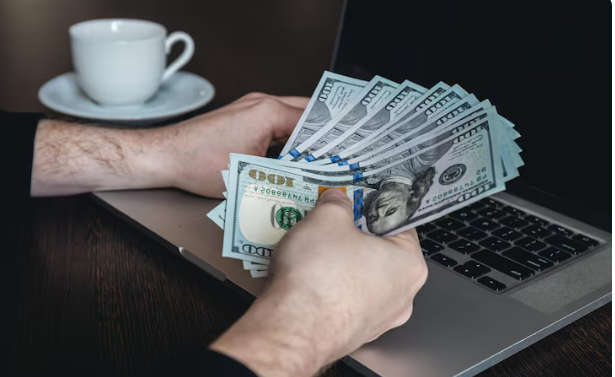
The other aspect of this story that is sometimes overlooked in tech-forward reportage is financial inclusion. Cash is not preferred by the 6% of American adults who do not have a checking account, debit card, or digital wallet of any type. It’s the only choice. For that group, a store’s card-only sign is more than simply inconvenient—it’s a door shut in their face. Congress is now debating the US Payment Choice Act, which would mandate that any company with a physical site take cash. Australia has gone so far as to require the acceptance of cash for necessities like groceries and fuel. Governments are starting to view the continuous use of cash as a matter of fundamental economic participation rather than as a legacy issue that has to be resolved.
How the balance finally settles is still up in the air. There is genuine pressure as payment technology continues to move toward digitalization. However, it seems that within the last two years, the discourse has evolved. The question now is whether the system being developed around digital money is truly intended for everyone who needs to use it, rather than whether cash will be replaced. For the time being, cash is accomplishing something that not too long ago appeared improbable: it is maintaining its position and, in some cases, regaining it.