


Listen to the article
Dark matter has been the universe’s courteous ghost for decades, present everywhere but invisible. It pulls on galaxies, bends starlight around massive clusters, and consistently declines to reveal its face in any Earthly laboratory. Astronomers have come to terms with their absence. In a way, they’ve even learned how to sketch it. However, the current situation feels different. The maps have improved in sharpness. The consequences are more bizarre. As you go through the most recent papers, you get the impression that the field has reached the point where the picture begins to look strange.
The DESI partnership concluded a five-year campaign in April on Kitt Peak, a small mountain in Arizona that is situated on the edge of the Tohono O’odham Nation’s territory. With 5,000 fiber-optic eyes that are repositioned every 20 minutes to take in the light of far-off galaxies one patch of sky at a time, the device itself appears almost endearingly mechanical. By the time the survey concluded on April 14, DESI had recorded 20 million nearby stars in addition to 47 million galaxies and quasars. That is six times the results of earlier surveys. The resultant 3D map is the biggest of its kind ever put together, and it is the driving force behind an increasing number of claims that there may be a problem with cosmology.
| Project Information | Details |
|---|---|
| Subject | High-resolution mapping of dark matter and large-scale structure |
| Primary Instruments | Dark Energy Spectroscopic Instrument (DESI) and the James Webb Space Telescope |
| DESI Location | Nicholas U. Mayall 4-meter Telescope, Kitt Peak National Observatory, Arizona |
| Survey Duration | Five years (May 2021 to April 2026) |
| Galaxies and Quasars Mapped | More than 47 million |
| Nearby Stars Surveyed | Over 20 million |
| Webb Map Coverage | Roughly 800,000 galaxies in the COSMOS field |
| Dark Matter Share of Universe | Approximately 27% |
| Dark Energy Share of Universe | Around 70% |
| Lead Operating Institution | U.S. Department of Energy’s Lawrence Berkeley National Laboratory |
| Total Collaborators | More than 900 researchers from over 70 institutions |
| First Full-Survey Results Expected | 2027 |
| Continued Observation Phase | Through 2028 |
The problems began to appear early. Dark energy, the force driving the universe’s accelerating expansion, may not be the constant, unchanging constant that the standard model has assumed since the 1990s, according to even the first year of DESI data. The field may be on the verge of a real revision. The findings are “a major paradigm shift,” a term that scientists typically use with caution, according to Klaus Honscheid, who oversees DESI’s instrument operations from Ohio State. It’s still unclear if the change will be that significant. However, it is no longer simple to write off the data as noise.
The fact that DESI’s map does not directly depict dark matter is what makes it so valuable. Astronomers deduce the shape of the invisible scaffolding from the locations of the visible objects, such as galaxies, quasars, and the massive clumpy filaments of the cosmic web. When rendered, the pattern is visually arresting. Galaxies are arranged by something that doesn’t shine, much like beads strung on threads with enormous voids in between. To be honest, it’s a silent kind of miracle to see that structure appear after eleven billion years of light travel.
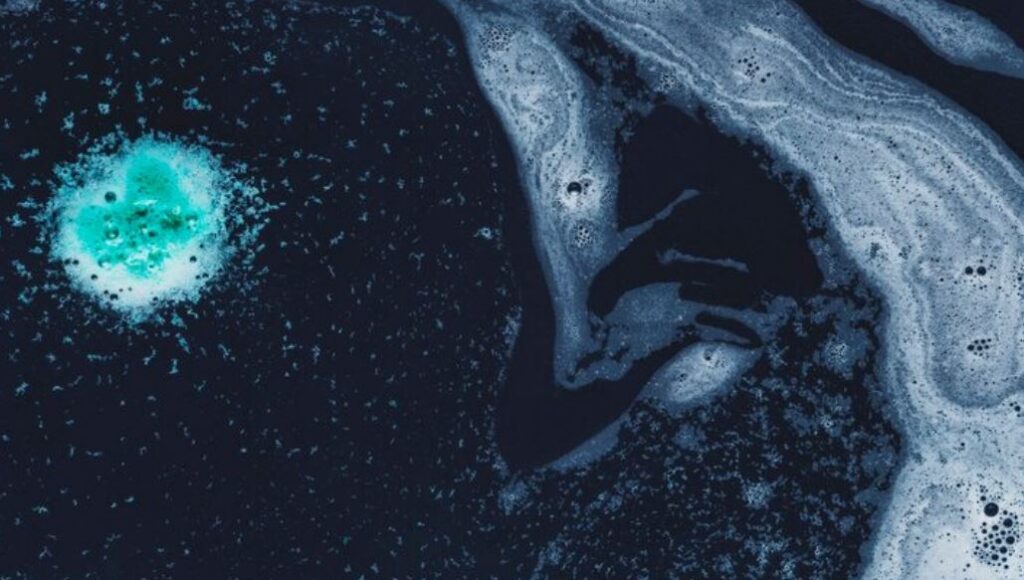
On a smaller section of sky, there is a parallel narrative. The highest-resolution dark matter map of the COSMOS field, a region of the sky only roughly two and a half times the size of the full moon, was created in January by a team at NASA’s Jet Propulsion Laboratory under the direction of Diana Scognamiglio using the James Webb Space Telescope. About 800,000 galaxies, many of which had never been seen before, folded. When compared to an earlier Hubble image of the same area, it’s like going from a smudged photocopy to a newly printed image. For a physicist, Richard Massey of Durham University’s description of it as “catching the gravitational scaffolding of the universe in the act” is remarkably evocative.
The map supported the theory that dark matter clumped first, followed by ordinary matter, and that galaxies, stars, planets, and other structures emerged from those hazy beginnings. However, it also unlocked a door that earlier surveys were unable to fully access. The filaments of the cosmic web, the tiny tangles where dark matter accumulates, can now be resolved in ways that were previously unattainable. It is actually unclear if the current models of dark matter—cold, slow-moving, and gravitationally tidy—will withstand this more minute detail. Some researchers appear cautiously hopeful. To be honest, others sound a little uneasy.
It is difficult to overlook the cultural significance of all of this. Cosmology has spent a generation refining a theoretical framework that fits the data well enough to be taught in undergraduate textbooks. This framework is sometimes referred to as Lambda-CDM. Currently, two of the biggest mapping initiatives in the history of the field are independently pointing to areas where that framework falters. With a few minor modifications, the standard model might endure. Perhaps dark energy changes over time in ways that are not explained by existing theories. Alternatively, and this is the most subtle possibility, dark matter itself may be more complex than previously thought, with substructures that change the narrative in ways that no one could have predicted.
It won’t be until 2027 that the first comprehensive results from DESI’s entire five-year run will be available. Nevertheless, the device will continue to observe through 2028, filling in the more difficult areas of the sky. There’s a sense that the next two years will be exceptionally fascinating for cosmology—not because anyone anticipates dark matter to appear out of nowhere, but rather because the maps are finally good enough to pose more insightful queries. This is ultimately how advancements in this field have always been made.