


Listen to the article
In the same way that meteorologists monitor hurricane swells, a cabinet of forecasters in Boulder, Colorado, keeps an eye on the Sun. Most of their work is undetectable. The public passes the room without ever realizing it exists, and on most days, not much happens. The magnetic loops above the chromosphere then reconnect every few years when a sunspot misbehaves, causing several hundred million tonnes of plasma to begin traveling toward Earth at a speed of three or four million miles per hour. That’s how space weather operates on a typical day. The disturbing aspect is that, despite everyone’s apparent lack of awareness, the contemporary world has grown far more sensitive to it.
During planting season in May 2024, a solar event that was later named the Gannon Storm caused GPS to move sideways throughout the American Midwest. This was the strongest geomagnetic disturbance in more than 20 years. Satellite-guided tractors began to drift, missing rows. In a matter of days, the agricultural sector in the United States reportedly lost roughly half a billion dollars. The news cycle moved on, and most people hardly noticed that their auroras were better than usual that weekend. However, the Gannon Storm served as a warning. Before any of us had established our civilization on top of a few thousand satellites in low Earth orbit, the Carrington Event of 1859, which destroyed telegraph offices throughout Europe and North America, was at least twice as severe.
| Quick Facts: The Solar Storm Risk to Modern Infrastructure | Details |
|---|---|
| Worst-case planning window | Once per 100–200 years |
| Historical benchmark | Carrington Event, September 1859 — at least twice as intense as the May 2024 storm |
| Most recent major event | “Gannon Storm,” May 2024 — strongest geomagnetic storm in two decades |
| Documented loss (May 2024) | About $500 million hit to the U.S. agricultural industry from GPS disruption |
| Satellites forced to maneuver during Gannon | More than half of all active satellites in low Earth orbit |
| Time-to-collision in LEO if control is lost (June 2025 estimate) | ~2.8 days |
| Same metric in 2018 (pre-mega-constellation) | ~121 days |
| Primary research source | Thiele et al., arXiv preprint, Dec 2025 |
| Lead author | Sarah Thiele, formerly UBC, now Princeton |
| Starlink avoidance maneuvers (Dec 2024 – May 2025) | 144,404 — about one every 1.8 minutes across the network |
| LEO orbital speed | ~17,000 mph (27,000 km/h) |
| Authoritative source on solar storm impacts | NASA’s Solar Storms and Flares page |
| Worst-case UK government report | STFC’s Summary of space weather worst-case environments, 4th ed., Jan 2026 |
| Typical solar storm warning window | 1–2 days |
| Last major recorded outage equivalent | October 2003 — power outages in Sweden and South Africa |
The worst case was described in eighty pages of meticulous, nearly dull prose in a report published in January 2026 by the Science and Technology Facilities Council of the United Kingdom. The category that their authors are worried about is not a once-in-a-million-year disaster. We should anticipate this kind of event every hundred or so years. Power grids tripping in areas, transformers aging years overnight due to induced currents, satellites losing altitude as the upper atmosphere puffs outward and drag increases, radio communications unreliable for days, polar flights diverted, and navigation degraded in ways that covertly cost billions are all part of their bleak and detailed picture. Apocalypse is not necessary. All you need is a sunny weekend.
However, Sarah Thiele and her colleagues published what altered the math in a December preprint titled “An Orbital House of Cards.” Thiele, who was previously at the University of British Columbia but is currently at Princeton, made an uncomfortable argument. About every 22 seconds, two satellites travel within a kilometer of one another across the world’s mega-constellations. Every eleven minutes, close approaches occur within Starlink alone. It may seem comforting to know that each Starlink satellite performs an average of 41 collision-avoidance maneuvers annually, but this is no longer a feature. It’s a reliance.
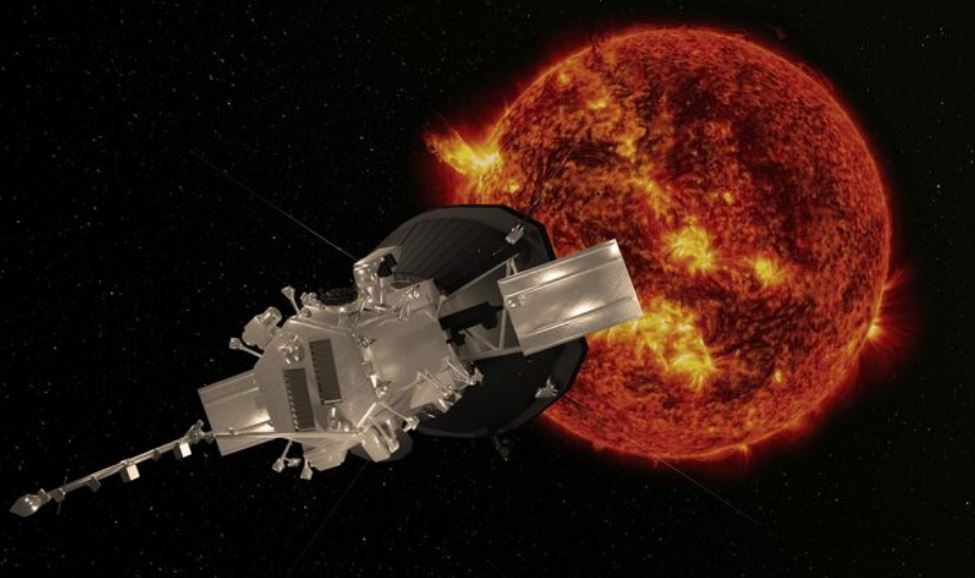
Operators may momentarily lose the ability to maneuver their fleets at all if a solar storm interferes with navigation and ground command, which is precisely what severe storms tend to do. As of June 2025, a total loss of avoidance control could permit a significant collision that produces debris in roughly 2.8 days, according to the paper’s key new metric, the CRASH Clock. The same computation provided about 121 days of grace in 2018, before SpaceX, Amazon, and the others started covering low orbit with metal. There is currently a 30% chance that even a 24-hour outage will cause the kind of collision that could start the cascade that Donald Kessler warned about in the 1970s. In a lengthy lunch break, years of space access were lost.
Reading all of this gives me the impression that the discussion of space has subtly moved from frontier to infrastructure. We discuss Starlink in the same manner that a generation ago discussed telephone wires. The constellation only functions because thousands of tiny things are always operating simultaneously, just like telephone cables. It’s amazing. Additionally, according to Thiele’s measurements, it is delicate in a way that isn’t mentioned in the marketing decks. Unlike the storm in 1989, a Carrington-scale event today would not simply blow out transformers in Quebec. In order to avoid getting in its own way, it would land on a network of moving parts that rely on constant communication.
As I watch this discussion develop, I find it troubling that there hasn’t been much public reckoning. There is no partisanship in solar storms. They don’t give a damn about which constellation was launched last or quarterly earnings. Although NOAA’s Space Weather Prediction Center works diligently, its warning window is typically only a few hours or a day. There isn’t a version of this where the answer is only technical. At some point, it will be necessary to decide ahead of time who will turn off what, including which polar flights remain on the ground, which power grid segments become islanded, and which orbit is given priority. These are political decisions that are not being made.
Boulder forecasters will continue to keep an eye on things. The sun will continue to do what suns do as it approaches the apex of its eleven-year cycle. On most days, nothing noteworthy occurs. The disturbing aspect is that we have created a civilization that takes on more and more responsibility every day. Whether we have the institutional reflexes to deal with the day that isn’t is still up for debate.