




Listen to the article
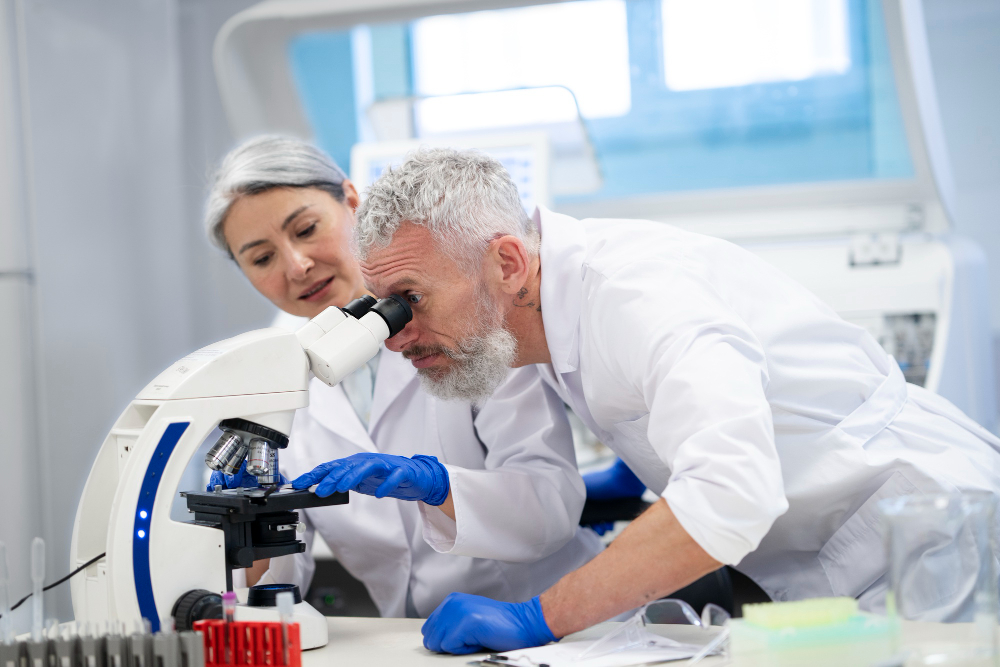
The lab is located in a calm building with fluorescent lights humming overhead, illuminating glass dishes filled with neurons and rows of microscopes that initially resemble frost patterns on a window. Scientists think they have discovered something disturbing and oddly hopeful within these delicate networks: evidence that the aging brain may not be as permanent as previously believed.
While examining older mice, researchers at the University of California, San Francisco started to notice a pattern. In some ways, their hippocampus, the area of the brain linked to memory and learning, appeared quieter. Like trees with their limbs stripped bare, neurons had fewer branching connections. A protein known as FTL1 seemed to be the culprit, slowly building up over time and interfering with the brain’s internal energy systems.
| Category | Details |
|---|---|
| Discovery | Protein DMTF1 and FTL1 linked to brain aging reversal |
| Research Institutions | University of California, San Francisco and National University of Singapore |
| Brain Region | Hippocampus (learning and memory center) |
| Key Finding | Reducing FTL1 or boosting DMTF1 restored neuron regeneration and memory in mice |
| Research Stage | Lab experiments and animal models |
| Potential Application | Future treatments for dementia and age-related cognitive decline |
| Published In | Science Advances, Nature Aging |
| Reference | https://www.sciencedaily.com |
Something unexpected occurred when researchers lowered the FTL1 levels in those older mice. Communication pathways that had previously waned were restored as their neurons started to grow new branches once more. There is astonishment when comparing the before and after photos because the older brain tissue doesn’t simply stabilize. It appears younger.
The alteration wasn’t merely aesthetic. In memory tests, the mice did better; they moved through mazes faster and hesitated less at corners where they used to be slowed by confusion. It’s possible that what scientists saw was a real reversal rather than just protection against additional decline. Contrary to popular belief, that distinction is important.
Another group at the National University of Singapore, meanwhile, was researching a different protein known as DMTF1 on the other side of the globe. There were hints of a different but related phenomenon on their lab benches, which were piled high with pipettes and printed genetic sequences. Neural stem cells became dormant and less able to regenerate as a result of a sharp decline in DMTF1 levels in aging brain cells.
The stem cells started to produce new neurons again when scientists increased DMTF1 in those cells. Previously dormant cells started to divide, proliferate, and form new structures under the microscope. Although the process’s safety in humans is still unknown, the visual evidence alone has challenged long-held beliefs.
After all, aging has historically been viewed as a one-way process.
For many years, the main goal of neuroscience has been to slow down rather than reverse brain aging. Instead of regaining lost function, the majority of dementia treatments, including Alzheimer’s, have focused on symptom management. Although the scientists themselves seem cautious and almost hesitant to oversell it, this new research raises the possibility of something more radical.
The unpredictable nature of biology contributes to some of the hesitancy. Gene activity is regulated by proteins such as DMTF1, which affects cell division and growth. Theoretically, the same growth process could raise the risk of cancer if it is accelerated. This is publicly acknowledged by researchers, serving as a reminder that advancement frequently has unforeseen repercussions.
The fact that mice are not humans is another reality. They have shorter lifespans and simpler brains. Sometimes, treatments that are completely effective in rodents completely fail in humans. This discovery might take the same well-traveled route, igniting curiosity before subtly disappearing into scientific anecdotes.
However, the timing seems off in some way. With dementia cases steadily increasing, aging populations worldwide are putting a tremendous strain on healthcare systems. Biotech firms and investors are keeping a close eye on things and appear eager for any reliable development. Early-stage studies to develop these discoveries into treatments are already being supported by some.
It is impossible to ignore the urgency when you are walking through memory care facilities. In brightly lit rooms, elderly patients gaze at pictures they can no longer identify. Families repeat well-known tales in hushed tones, leaving faces expressionless. The loss seems slow but unrelenting.
Because of this, even hesitant progress has emotional significance.
The researchers compare the aging process of the brain to a dimmer switch rather than a permanent shutdown. It seems that proteins like DMTF1 and FTL1 affect whether neural stem cells go into dormancy or stay active. Theoretically, modifying those signals could aid in regaining the brain’s capacity for regeneration.
One can’t help but wonder what that might signify in decades. Could memory be preserved well into old age with future treatments? Is it possible that cognitive decline will no longer be a given? Or will the human brain’s intricacy prove to be too great for safe manipulation?
The answers are still far off.
Inside the laboratory, neurons are still developing in silence within their glass dishes, their slender branches extending outward to create new connections. Aware that breakthroughs frequently come gradually under the guise of incremental progress, researchers carefully move between benches, documentation every change.
As we watch this develop, we get the impression that science is getting closer to something significant—not a miracle just yet, but a possibility that seemed unattainable at first.