


Listen to the article
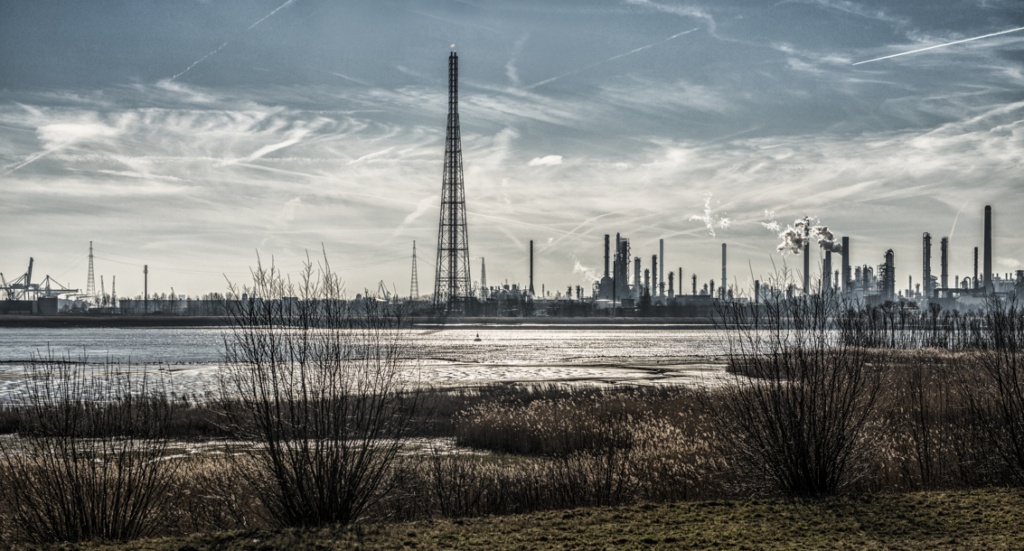
A more subdued form of infrastructure is emerging in the industrial sprawl of Jubail, where pipelines run silver lines across the sand and smokestacks rise alongside the Gulf. The most lucrative oil producer in the world, Saudi Aramco, is making significant investments in carbon capture technology because it believes that the fate of hydrocarbons may depend on what happens after the fuel is burned.
The figures are not negligible. Beginning in 2028, Aramco’s proposed CCS hub in Jubail is expected to capture up to nine million metric tons of CO₂ annually. Aramco facilities would supply six million tons, with the remaining amount coming from nearby industrial plants that share the infrastructure.
| Item | Details |
|---|---|
| Company | Saudi Aramco |
| Sector | Integrated energy & chemicals |
| Major Project | Jubail CCS Hub (Phase 1 capacity: up to 9 million metric tons CO₂ per year by 2028) |
| Existing Capture | Hawiyah gas plant captures ~45 million standard cubic feet of CO₂ per day |
| New Tech Partnership | Collaboration with Carbon Clean and SAMSUNG E&A on CycloneCC technology |
| Mobile Innovation | Vehicle-based carbon capture capable of capturing up to 40% of exhaust CO₂ |
| Reference | https://www.aramco.com/en/what-we-do/energy-innovation/advancing-energy-solutions/carbon-capture-utilization-and-storage |
It’s difficult to ignore the scope of the ambition when you’re standing outside a refinery complex and watching heat shimmer over pipes and distillation columns. This kind of carbon capture is not a side project. The rewrite is industrial.
Experience is built upon by this push. Aramco already captures about 45 million standard cubic feet of CO₂ per day at its Hawiyah gas plant, which pipes the gas 85 kilometers to the Uthmaniyah reservoir. The gas is injected underground there to improve oil recovery and sequester emissions.
The irony of capturing carbon to produce more oil is frequently brought up by critics, but Aramco executives present it in a different way. They contend that it is feasible to reduce the carbon intensity per barrel and preserve demand at the same time. Investors appear to think that dual play makes sense.
The most recent development is a partnership with SAMSUNG E&A and Carbon Clean to implement a modular technology known as CycloneCC. The device is made to capture CO₂ even from low-concentration exhaust streams, such as those from natural gas turbines, and is more compact and smaller than traditional systems. Up to 50% less money may be spent on installation if it works as planned. That’s a significant change in the field of carbon capture, where economics frequently stifles passion.
Engineers who are aware that there is little room for error describe rotating packed beds and proprietary solvents while strolling around Aramco’s research campus in Dhahran. It has long been argued that carbon capture is too costly and energy-intensive. Cutting expenses is not only beneficial, but also necessary. The 44-million-ton national target by 2035 is perceived as being aspirational unless there is a significant reduction in costs.
Then there is mobile carbon capture, which is the more experimental side. Up to 40% of CO₂ emissions can be directly captured from a car’s exhaust by Aramco’s prototype systems, which then store the emissions for later offloading.
Vehicles arriving at gas stations to unload captured carbon in addition to refilling tanks create an almost futuristic image. It’s still unclear if regulators would require that extra step or if consumers would accept it. However, the fact that a major oil company is developing such devices suggests that pressure is increasing in that area.
The larger picture is important. The four pillars of Saudi Arabia’s Circular Carbon Economy framework—which it supported during its G20 presidency—are reduce, reuse, recycle, and remove. All four are impacted by carbon capture. The strategy focuses more on managing hydrocarbons’ byproducts than it does on completely giving up on them. According to some environmentalists, that would increase reliance on fossil fuels. Others contend that without CCS, industrial sectors like steel and cement just cannot decarbonize quickly enough.
Trade is changing globally as a result of carbon border taxes and stricter emissions regulations. Exporters’ calculations are already being impacted by Europe’s Carbon Border Adjustment Mechanism.
Demonstrating lower embedded carbon could become more than just a climate move for a nation whose economy is heavily dependent on oil and petrochemicals; it could also become a competitive move. As this develops, it seems that Aramco’s investment is both innovative and defensive.
However, scale continues to be the impending obstacle. It will take pipelines, monitoring systems, geological surveys, clear regulations, and public trust to increase yearly capture from less than one million tons to tens of millions.
For decades, if not centuries, geological storage capacity must be demonstrated to be secure. Confidence would be rapidly damaged by any leak.
However, it seems riskier to do nothing while the energy transition picks up speed elsewhere. According to Aramco’s strategy, hydrocarbons will continue to play a significant role for decades, but only if emissions are strictly controlled. The idea that carbon capture can balance ongoing oil production with climate pressure is a well-thought-out gamble.
Politics, technology, and cost curves that are still shifting will determine whether or not that wager is profitable. For the time being, research teams are working late into the night to run simulations, assemble modular capture units, and lay pipelines in Jubail.
The wind from the desert continues to blow across refinery lights. Additionally, carbon is being redirected somewhere below the surface—not vanishing, but being compressed, stored, and controlled.
Not everyone will be satisfied. However, it clearly indicates that even the biggest oil producer in the world is changing its strategy.