




Listen to the article
According to John Moretti, the floor of Bender’s Cave appeared to have been handled carelessly by an ancient museum. There are bones everywhere. They are dispersed throughout 21 sampling zones in the shallow, chilly underground stream, polished and rust-red from mineral exposure, and more are visible with every few feet of crawling. They are not arranged, nor are they buried in sediment layers that need to be carefully excavated with dental picks and brushes. Moretti had on a snorkel mask and a wetsuit. This was not what he had anticipated. There didn’t appear to be anyone who had worked in paleontology in Central Texas for the past century.
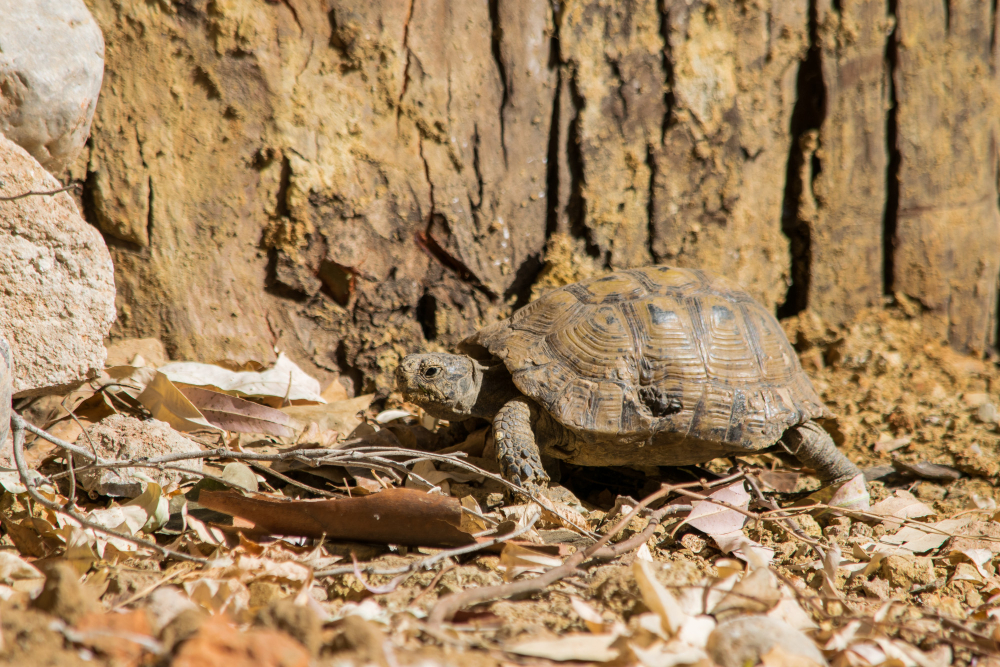
Holmesina septentrionalis, a now-extinct relative of armadillos that lived during the Pleistocene and grew to about the size of a lion, is the discovery that will raise the most eyebrows. This was no small animal. The first tangible proof of the species ever found in Central Texas was its armor plates, which were found in the streambed. Alongside those plates, Moretti and his co-author John Young, a local caver who was more familiar with these subterranean passageways than any academic, discovered shell fragments from Hesperotestudo, an extinct genus of giant tortoise that had never been documented in the area. Both the pampathere and the tortoise needed warm temperatures to survive. For many years, scientists had constructed an image of Ice Age Central Texas as a dry, cool grassland that would not have suited either animal. Apparently, the picture was not complete.
| Discovery Site | Bender’s Cave — a water cave on private property in Comal County, Texas, near San Antonio; cave contains an active subterranean stream connected to the Trinity Aquifer; previously unstudied by paleontologists |
|---|---|
| Lead Researcher | Dr. John A. Moretti — vertebrate paleontologist, recently completed doctoral degree at the University of Texas at Austin’s Jackson School of Geosciences; co-author John Young, a local caver, assisted with all six field expeditions |
| Exploration Period | Six trips between March 2023 and November 2024; fossils collected from 21 separate zones within the cave; stream depth during sampling was typically a few feet; no excavation required — bones retrieved directly from the submerged streambed |
| Star Finds: The Pampathere | Holmesina septentrionalis — a pampathere, an extinct relative of armadillos that lived during the middle to late Pleistocene (781,000–126,000 years ago); approximately the size of a lion; identified from recovered armor plates; had never previously been documented in Central Texas |
| Star Finds: The Giant Tortoise | Hesperotestudo — an extinct genus of giant tortoise requiring warm temperatures to survive; identified from shell fragments; also never previously recorded in Central Texas; presence challenges the long-held view of the region as a dry, cool grassland during the Ice Age |
| Other Fossils Recovered | Giant ground sloth claw (Megalonyx jeffersonii); mastodon bones; camelid bones (Camelops — ancient relatives of modern llamas); saber-toothed cat remains; all fossils showed polished surfaces and uniform rusty-red mineralization, suggesting a single depositional event |
| Proposed Age & Context | Researchers believe the fossils may date to the last interglacial period — a warm interval peaking ~125,000 years ago (Marine Isotope Stage 5); if confirmed, they would be the first interglacial-era fossils found in Central Texas; statistical analysis grouped Bender’s Cave with interglacial fossil sites near Dallas and the Gulf Coast |
| Dating Challenge | Collagen proteins needed for radiocarbon dating were destroyed by mineral-rich cave water; bones also absorbed carbon and minerals post-deposition, contaminating direct dating; team is now attempting to date calcite crusts that formed on the bones after cave entry to establish minimum depositional age |
| Publication | Study published March 19, 2026 in the peer-reviewed journal Quaternary Research — DOI: 10.1017/qua.2025.10071; findings covered by UT Austin’s Jackson School of Geosciences, Live Science, IFLScience, and Popular Science |
| Broader Significance | Central Texas has had nearly a century of paleontological fieldwork — the absence of these species from the existing record, combined with their sudden appearance in a single water cave, suggests intact Ice Age ecosystems may remain undiscovered beneath the Edwards Plateau karst system |
Bender’s Cave is a water cave that serves as a conduit for subterranean streams that feed into the Trinity Aquifer system. It is located beneath private property in Comal County, close to San Antonio. Although water caves are challenging for formal science, cavers have consistently described them as fossil-rich. Sinkholes must be descended for access. Rainfall causes variations in the stream level. Additionally, the water itself is chemically aggressive; in addition to destroying the collagen proteins that paleontologists usually use for radiocarbon dating, the mineral-rich flow that keeps the cave’s passageways open also leaves behind bones that are genuinely ancient but frustratingly difficult to date. Between 2023 and 2024, Moretti and Young made six trips, collecting by hand from the streambed in 21 different zones without the need for excavation. The fossils’ consistent appearance—round and polished, with the same reddish mineralization—suggests that they entered the cave at about the same time, having been carried in through sinkholes during a previous flood event.
The assemblage is made even more bizarre by the additional fossils. A claw from a giant ground sloth, Megalonyx jeffersonii, was present. Thomas Jefferson, an enthusiastic amateur naturalist, had previously described this species from specimens discovered in Virginia. There were bones from saber-toothed cats, camelid remains from Camelops (the long-legged, ancient North American camel that lived and died before humans arrived in force), and mastodon bones. When taken as a whole, these animals do not belong in a dry grassland. Mastodons and ground sloths were forest creatures. Both the pampathere and the enormous tortoise required warmth. When considered collectively, the assemblage suggests that Texas was warmer and wetter than the standard Ice Age model permits. Specifically, it points to the last interglacial period, which peaked about 125,000 years ago and is known geologically as Marine Isotope Stage 5.
Regarding the dating question, Moretti is cautious. Additionally, direct radiometric dating will not be accurate due to the mineral contamination that destroyed the collagen. In order to test whether the interglacial hypothesis is true, the team is currently working on dating calcite crusts that developed on the bones after they entered the cave. While this method cannot provide precise ages, it can establish minimum depositional dates. The statistical comparison work is more immediately suggestive: Bender’s Cave clustered with known interglacial-period sites near Dallas and along the Gulf Coast, where the same giant tortoises, pampatheres, and ground sloths have already been dated to that warm interval, rather than with other Central Texas sites when Moretti grouped Texas Ice Age fossil sites based on the similarity of their faunal assemblages. The cave seems to be part of a Texas past that has no Central Texas address up to this point.
The circumstances surrounding the find itself are subtly remarkable. For almost a century, paleontologists have been paying close attention to Central Texas. In order to create a comprehensive picture of what inhabited this area in the late Pleistocene, field crews have worked the area and mapped its deposits. However, due to their inconvenience, the water caves—karst passageways beneath the Edwards Plateau that are fed by the same aquifer system that provides drinking water to millions of Texans—were largely ignored. They overflow. They need snorkels. The bones are merely resting on a streambed; they are not embedded in rock. It’s difficult to ignore the fact that a man wearing a wetsuit picked items out of the mud—something that hundreds of researchers over a century ago apparently didn’t think was worth the effort—to make the most important Ice Age fauna discovery in Central Texas in a generation.
The complete picture of what’s inside Bender’s Cave is still being put together. The main obstacle is still dating, and the interglacial interpretation is a well-supported theory rather than an established fact until the calcite crust analysis is finished. The existence of animals that weren’t supposed to be there, in a place where they weren’t supposed to be, and in a cave that wasn’t supposed to be worth the trouble to enter is confirmed. Bender’s Cave is one node in the extensive network of underground passageways that make up the Edwards Plateau karst system, which is largely unexplored. Given what recently surfaced in one flooded room, it’s more than likely that the Ice Age Texas that hasn’t been discovered yet is still down there, patiently waiting for someone with a bag and a snorkel at their waist in the dark.