



Listen to the article
Beyond Neptune, a tiny, frozen body is floating in the darkness and has, in defiance of all logic, developed an atmosphere. In January 2024, Japanese astronomers nearly unintentionally caught it by observing how starlight softened and bent behind the object’s edge rather than snapping off cleanly. If you weren’t looking for it, you might miss that softness, which lasts for about a second and a half. They were searching, but this was not what they were searching for.
The item, cataloged as (612533) 2002 XV93, is the kind of thing that is rarely discussed at social gatherings. It circles the Sun in a slow, patient resonance with Neptune and is about 311 miles wide, which is less than a quarter of Pluto’s diameter. Three for Neptune, two for it. Planetary scientists have assumed for decades that bodies this small and this cold don’t retain gas. They are unable to. The sun is too far away, the temperatures are too harsh, and their gravity is too weak. And yet there it is, a thin shell of something encircling a world that ought not to have one.
| 2002 XV93 — Key Information | Details |
|---|---|
| Official Designation | (612533) 2002 XV93 |
| Object Type | Trans-Neptunian Object (Plutino) |
| Diameter | Approximately 311 miles (500 km) |
| Location | Kuiper Belt, beyond Neptune |
| Orbital Resonance | 2:3 with Neptune |
| Atmosphere Thickness | 5–10 million times thinner than Earth’s |
| Discovery of Atmosphere | January 10, 2024, via stellar occultation |
| Lead Researcher | Dr. Ko Arimatsu, National Astronomical Observatory of Japan |
| Observation Sites | Kyoto, Nagano, Fukushima (Japan) |
| Suspected Cause | Cryovolcanism or recent impact event |
| Published In | Nature Astronomy, May 2026 |
Leading the observation team from Japan’s National Astronomical Observatory, Dr. Ko Arimatsu has used language with caution. He refers to the brightness shift as “smooth,” a term that is frequently used politely in scientific writing because we did not anticipate this. To capture the moment 2002 XV93 slid in front of a background star, the team set up at three locations: a citizen-run telescope hidden away in Fukushima and two professional observatories. These kinds of stellar occultations last only a few seconds. You have to wait years or even decades for another window if you miss this one.
They measured an atmosphere that was between five and ten million times thinner than the air that is currently pressing down on your shoulders. Practically a whisper. However, it is unquestionably a thing.
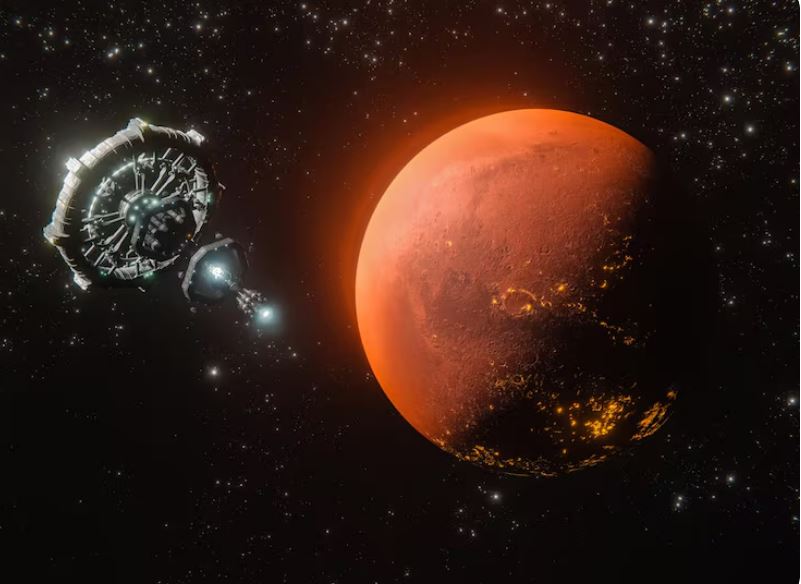
It originated from the puzzle. According to one theory, methane, nitrogen, or carbon monoxide are pushed up from below the crust by ice volcanoes, a process known as cryovolcanism. Geology is cold, slow, and unyielding. The other, darker, and more intriguing possibility is that 2002 XV93 was recently struck by a comet or another Kuiper Belt body, which released trapped gas in a slow exhale. The atmosphere is transient if that is the case. It disappears into space after a few hundred years, possibly a thousand.
It’s difficult to ignore how the outer solar system continues to make textbooks look foolish. Before New Horizons arrived and discovered nitrogen glaciers, Pluto was thought to be a frozen rock. This is it now. Investors in the field seem to think the Kuiper Belt will continue to do this for some time, and there are investors in the form of grant money and attention. Observing the accumulation of discoveries gives the impression that our models for the outer solar system were constructed with insufficient information and excessive confidence.
Beyond this one odd object, the answer matters whether the atmosphere of 2002 XV93 is the result of a recent collision or a slow inner heat. The entire population of trans-Neptunian objects becomes more intriguing and challenging to classify if small bodies are able to retain gas, even for a brief period of time. It will probably be examined more closely by the James Webb Space Telescope. Occultations in the future will also be beneficial. For the time being, a small, peaceful world beyond Neptune is breathing in a way that no one could have predicted.