

Listen to the article
When I first learned about self-healing concrete, I thought it was marketing. There’s a certain ring to the phrase that appears in glossy depictions of future cities. However, it is more difficult to ignore the work coming out of Dubai, especially that of researchers at the United Arab Emirates University. They have been discreetly researching how to incorporate living bacteria into one of the hardest, most resilient materials ever created by humans. Additionally, preliminary findings indicate that the concept might be able to withstand the slow, grinding stress of a building performing its function as well as the desert sun and salt air.
cracks in concrete. The proof is evident to anyone who has stood under one of the older towers in Deira or strolled along a Dubai overpass in the August heat. Hairline fractures spread almost imperceptibly at first, much like old paint. The issue is that water enters, followed by carbon dioxide, and eventually the steel rebar inside starts to corrode. In tunnels, foundations, or marine structures, fixing those cracks is costly, time-consuming, and occasionally practically impossible. Engineers believe that the maintenance bill alone is becoming unmanageable.
| Project Information | Details |
|---|---|
| Research Focus | Self-Healing Bio-Concrete (Microbial Repair Technology) |
| Lead Institution | United Arab Emirates University, Department of Mechanical and Aerospace Engineering |
| Conference Presented | ASET 2022 (Advances in Science and Engineering Technology) |
| Location | Dubai, United Arab Emirates |
| Key Bacteria Used | Bacillus Pseudofirmus, Sporosarcina Pasteurii |
| Healing Agent | Calcium Lactate (chemical nutrient) |
| Strength Recovered in Healed Crack | Roughly 25% of original (vs. 15% with conventional sealing) |
| Dormancy Period of Bacteria | Up to 200 years inside the concrete matrix |
| Activation Trigger | Contact with water and oxygen through cracks |
| Global Industry Energy Use of Cement Concrete | Approximately 12–15% |
| Annual U.S. Repair Cost for Damaged Concrete Property | Estimated above $14 billion |
The bacteria enter the picture at that point. Working with partners throughout the region, the UAEU team has been creating a bio-concrete that incorporates calcium lactate and certain dormant, safe strains of Bacillus into the wet concrete. Sometimes for decades, the bacteria do nothing but sit there. They awaken when a crack opens and water seeps in. They eat. Additionally, they create limestone as they eat the calcium lactate, which gradually fills the crack from the inside out. In a poetic sense, it sounds almost biological, and it is.
The system’s need for patience is remarkable. Research presented at the ASET 2022 conference in Dubai indicates that the healing agent may remain dormant for up to 200 years. It’s difficult to comprehend that figure. While most building materials are made to withstand deterioration, this one is made to wait. A different experiment carried out in an SGS laboratory in Karachi revealed that healed cracks regained about 25% of the concrete’s original strength, compared to about 15% through conventional sealing. Cambridge researchers have been working concurrently on similar microcapsule-based systems. Not flawless, but significant, especially on a large scale.
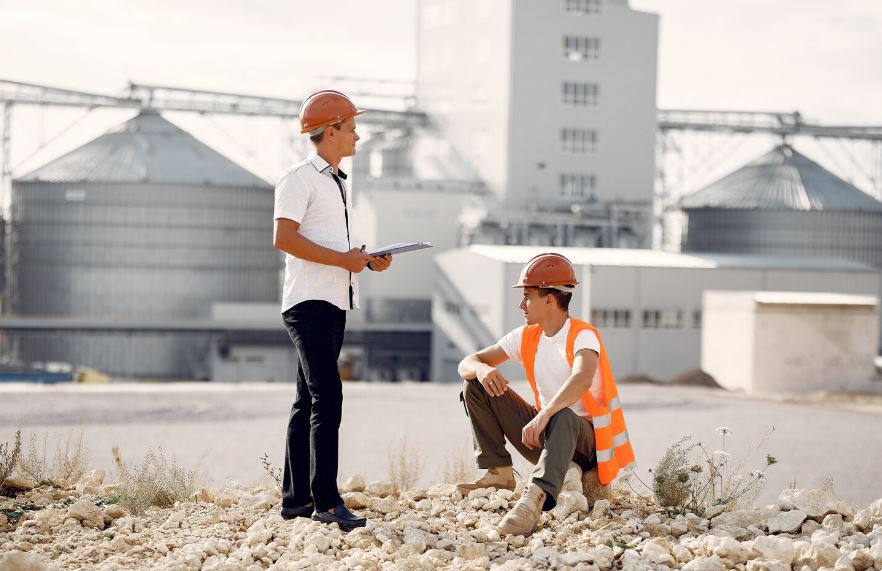
The geographic logic of this work occurring in Dubai in particular is difficult to ignore. The city has built itself on concrete and ambition, sometimes in an almost reckless manner. While it took other cities a century, skylines were built in ten years. These buildings are now deteriorating, stressed by salt, and subjected to extreme humidity near the coast. Here, a self-healing substance is more than just a curiosity; it’s a workable solution to an issue the city is beginning to recognize. It’s still unclear if the technology scales economically. The cost of producing bio-concrete is still higher, and the bacterial component adds complexity that conventional contractors are not prepared for.
Beneath all of this is a more subdued question. What happens to the routines of maintenance, inspection, and even the actual labor of construction if buildings are capable of self-repair? I’ve talked to engineers in related fields, and they usually shrug at that. Humans will still be required for the infrastructure. However, the relationship is changing. In the past, concrete was something we poured and then forgot about. Researchers are now treating it almost like a tissue—something that breathes, reacts, and sometimes heals—in Beirut, Cambridge, Dubai, and other places. It’s tempting to envision a generation of buildings that age more gracefully than the ones we currently have as we watch this develop. The next ten years will likely determine whether that future materializes on time or at all.