




Listen to the article
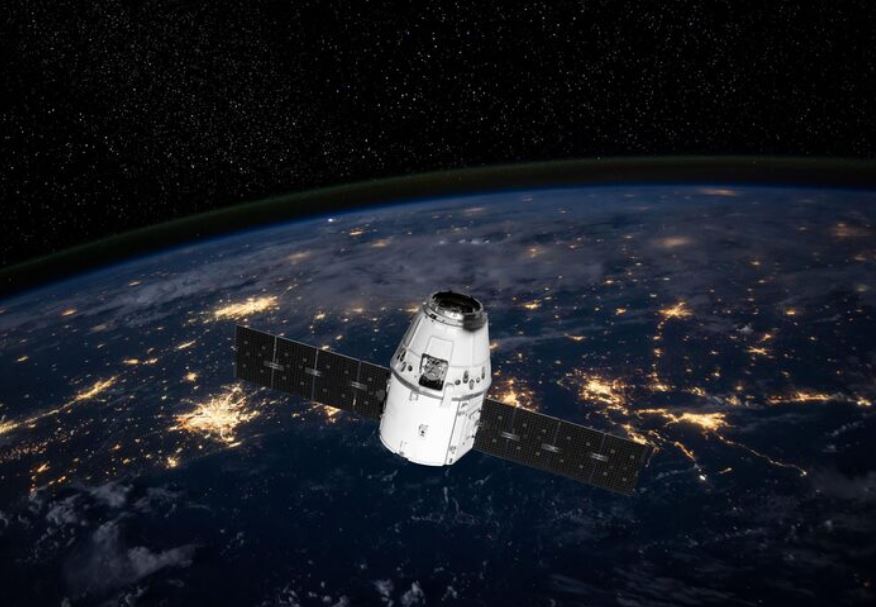
A small Saudi satellite is currently floating along a path that circles far past the Moon’s neighborhood and back, somewhere between the dunes outside Riyadh and the chilly silence of high orbit. Shams is its name. Riding on NASA’s Artemis II stack, it launched on April 4 and communicated with ground controllers in the Kingdom within hours of separation. The telemetry was received by the engineers who constructed it, the majority of whom were young and had received their training in Saudi Arabia. Speaking with those involved in the project gives the impression that nobody really believed it until the signal locked.
The mission operates as a deep-sky instrument aimed at the Sun’s outbursts and the radiation fields that sweep across the inner solar system, but it is not a telescope in the traditional sense. With a highly elliptical orbit that dips as close to Earth as 500 kilometers and stretches out to about 70,000 kilometers, Shams will have an advantage over most national satellites. From there, it will investigate solar X-rays, high-energy particles, the planet’s magnetic field, and the general space weather—the kind of information that safeguards GPS signals, power grids, airplanes, and eventually, most likely, astronauts traveling to Mars.
| Saudi Arabia’s Space Telescope & Shams Mission — Key Information | |
|---|---|
| Mission Name | Shams (شمس) — meaning “Sun” in Arabic |
| Launching Country | Kingdom of Saudi Arabia |
| Lead Agency | Saudi Space Agency (SSA) |
| Launch Date | April 4, 2026 |
| Launch Vehicle | NASA’s Space Launch System (SLS), Artemis II mission |
| Orbit Type | Highly Elliptical Orbit (HEO) — ranging from roughly 500 km to 70,000 km above Earth |
| Primary Purpose | Monitoring space weather, solar radiation, X-rays, magnetic field activity |
| Significance | First Arab satellite in NASA’s Artemis programme |
| Acting CEO, SSA | Dr. Mohammed Al-Tamimi |
| Strategic Framework | Saudi Vision 2030 — National Industrial Development & Logistics Program (NIDLP) |
| Related National Milestone | AlUla designated GCC’s first International Dark Sky Park (October 2024) |
| Astronauts Already in Orbit Record | Ali AlQarni & Rayyanah Barnawi (Ax-2 mission, May 2023) |
It’s worth considering the implications of that. Saudi Arabia’s space aspirations were hardly mentioned in international briefings ten years ago. Shams has made the Kingdom the first Arab nation with a dedicated payload on a crewed lunar mission, and the Kingdom is currently a part of the Artemis Accords, which were signed in 2022 alongside more than sixty other countries. That is a big leap. It’s a generational issue.
It’s difficult to avoid thinking about the lengthy arc behind this as it develops. Names like Aldebaran, Altair, and Betelgeuse still bear the imprint of Arab astronomers who once mapped the night sky with such accuracy that European scholars borrowed from them for centuries. The present is a sort of return, according to 25-year-old Saudi science communicator Reyam Alahmadi, who founded Astrophile, the Kingdom’s first Arabic astronomy magazine. She insists it’s not nostalgia. accountability. There is a component to that. In late 2024, AlUla, located in the northwest of the country, was designated as the first International Dark Sky Park in the Gulf Cooperation Council (GCC). Visitors describe the sky there as being so undimmed that it seems almost prehistoric.
Skepticism has its place, of course. The Shams payload is a single satellite rather than a fleet, and Saudi Arabia’s space program is still in its infancy. It’s unclear if the nation will be able to maintain this momentum, continue producing hardware domestically, train engineers, and negotiate its way into foreign missions. Prestige projects occasionally surpass the institutional depth required to support them, and national space programs are costly. Dr. Mohammed Al-Tamimi, the acting CEO of the Saudi Space Agency, has purposefully framed Shams as evidence of advancement under Vision 2030. It’s also incomplete.
Even among foreign observers, however, there is a sense that something changed on April 4. In 2023, two Saudis traveled to the International Space Station, with Rayyanah Barnawi becoming the first Saudi woman to enter orbit. In the most ambitious lunar endeavor in fifty years, a Saudi-built instrument is now gathering data alongside American, European, and Japanese hardware. It’s getting harder to ignore the pattern.
The deep-sky search, which aims to understand the composition of the universe, its behavior, and the threats it poses from above, has always been a collaborative endeavor that is slower and more bizarre than any single launch. Now, Saudi Arabia has quietly put its hand on the table. The Kingdom has at least joined the discussion it once helped create, regardless of whether the next ten years bring a true national observatory, a domestic deep-space telescope, or just more satellites like Shams.