



Listen to the article
The beach, which stretches for miles along the coast of Western Australia, is broad, pale, and windswept; even in photos, it seems far away. The coastline is not gentle. The sounds that travel through shallow water here bounce differently than they do in the deep ocean where sperm whales spend the majority of their lives, the shelf drops unevenly, and the tidal patterns are intricate. Wildlife officers faced the same question that researchers have been asking for decades when a pod of about 200 of them came ashore along this stretch, their bodies arranged in the horrible stillness that large animals have when they’ve stopped fighting: why did they come here, and why all at once?
In this region of the world, mass strandings are nothing new. Despite significant scientific attention, the long and poorly understood history of cetacean beachings along Australia’s coastline, especially in the isolated regions of Western Australia and Tasmania, has resisted clear explanation. In September 2022, about 230 pilot whales became stranded on Tasmania’s Ocean Beach, which is close to Macquarie Harbour. Two years prior, 470 pilot whales had beached there. Hundreds of people flocked to the shoreline when a lone 15-meter sperm whale grounded on a sandbar off Rockingham Beach near Perth in December 2023. The whale died at dawn the next day. Every incident prompts a reaction, an inquiry, and a series of conflicting theories that seldom come to an agreement before the next one emerges.
| What Is Cetacean Stranding? | Cetacean stranding — also called beaching — is a phenomenon in which whales and dolphins swim or drift onto shallow coastal waters or beaches, often unable to return to sea; can occur singly or in mass events involving hundreds of animals |
|---|---|
| Species Involved | Sperm whales (Physeter macrocephalus) — the largest toothed predator on Earth; males can reach 18 meters and 57 tonnes; they navigate using echolocation and live in tightly bonded social groups; deep-water hunters, making shallow coastal environments particularly disorienting |
| Western Australia Stranding History | Western Australia’s extensive coastline has a documented history of mass strandings; the Department of Biodiversity, Conservation and Attractions (DBCA) manages responses across the state’s 12,000+ km of coastline; a single sperm whale stranded at Rockingham Beach (near Perth) in December 2023, drawing hundreds of onlookers before the animal died |
| Tasmania Comparison Event (Sept 2022) | ~230 pilot whales stranded on Ocean Beach, Macquarie Harbour, Tasmania — same location where 470 whales beached in 2020 (about 380 died); rescuers covered animals in wet blankets and poured water from buckets to keep them alive while marine conservation teams mobilized |
| Why Sperm Whales Are Especially Vulnerable | Sperm whales are deep-ocean animals — their echolocation works poorly in shallow, gently sloping coastal waters where sound reflects unpredictably; once aground, their massive body weight collapses their lungs and overheats them rapidly; survival rate in mass strandings is very low |
| Leading Scientific Theories | Social bonding and “follow the leader” behavior (pod follows a sick or disoriented matriarch); navigational failure from geomagnetic anomalies; military or industrial sonar disruption; climate-driven prey displacement forcing whales into unfamiliar coastal zones; disease or parasitic infection affecting echolocation; combination of multiple simultaneous factors |
| Australia’s Role in Global Strandings | Australia — particularly Tasmania and Western Australia — accounts for a disproportionate share of the world’s mass stranding events; researchers from AIMS (Australian Institute of Marine Science) and state wildlife agencies have been studying the pattern for decades without reaching consensus on primary cause |
| Climate Change Connection | Shifts in ocean temperature are altering the distribution of deep-water squid — the primary prey of sperm whales — potentially driving pods into unfamiliar hunting grounds closer to shore; ocean warming has accelerated since 2020, coinciding with increased stranding frequency in Australian waters |
| Rescue Challenges | A beached sperm whale weighing 30+ tonnes cannot be physically moved by human crews; options are limited to keeping the animal wet and cool, attempting to guide it back to sea at high tide if alive, or humane euthanasia if suffering is severe; success rates for large sperm whale strandings remain very low |
| Broader Pattern | Mass strandings are increasing globally in documented frequency; between 2020 and 2025, several events involving 100+ animals occurred in New Zealand, Tasmania, Western Australia, and the Falkland Islands; scientists debate whether this reflects better reporting, genuine increase, or both |
Analysis of the situation is especially challenging when it comes to sperm whales. They are deep-ocean creatures that can dive over two kilometers in search of giant squid, and they have incredibly advanced echolocation in the open water habitats where they originated. That same system is unreliable in shallow coastal zones. Near gently sloping seabeds, sound behaves differently, bouncing and scattering in ways that can confuse a whale that has spent its entire life using acoustic reflection to navigate in deep, cold water. It can happen more quickly than the animals can process the change from open ocean to the kinds of coastal shallows where strandings usually happen. They’re too close to shore to change course by the time the seafloor becomes an issue.
Mass events are made more tragic by the social structure of sperm whales. These animals have strong bonds, are arranged in matrilineal groups, have intricate communication systems, and have a strong propensity to stick together under pressure. The “follow the leader” theory, which holds that a pod beaches because it follows a sick, parasitized, or confused person into shallow water, has been making the rounds in the scientific literature for a long time and is still very credible. Because of how closely they travel together, pilot whales—which were involved in the Tasmanian events—are thought to be the species most vulnerable to this dynamic. The reason behind the leader’s initial mistakes is less obvious. The question is persistent because there is evidence for each theory—disease, acoustic injury, navigational confusion from geomagnetic anomalies, or just plain bad luck—as well as evidence against each.
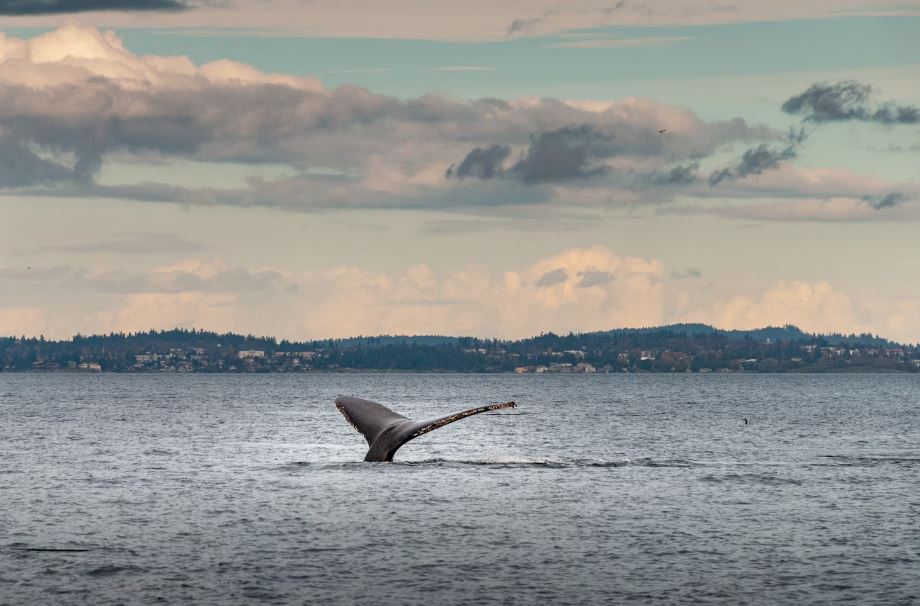
Over the past few years, climate change has become a more prominent topic of discussion. Sperm whales rely on deep-water squid, which are adapting to warming oceans by changing their range in ways that force whale feeding grounds into new areas. A pod that follows prey into an area where the seafloor topology is more hazardous and shallower than their typical hunting grounds is already in a situation for which its navigation system was not designed. Warmer waters may not be directly killing whales, but they may be subtly changing the underwater topography that whales travel through, posing new threats in previously safe areas. It’s not an easy mechanism to investigate, and it doesn’t yield the kind of conclusive single-cause findings.
The issue of human noise is another. Cetacean echolocation and communication are hampered by underwater sound produced by commercial shipping, military sonar, and seismic surveying for oil and gas. Researchers have long maintained that the cumulative acoustic load in crowded ocean corridors has increased to the point where its effects on whale behavior are difficult to distinguish from baseline. Sonar exercises have been linked to certain stranding events in numerous cases worldwide. Over the past 20 years, extensive offshore resource exploration has taken place in Western Australian waters. It is precisely the kind of question that seldom receives a clear response from a single stranding: whether any of that contributed to this event or if it is a background factor alongside climate disruption, navigational failure, and social bonding behavior.
The park rangers, marine biologists, and volunteers who show up on beaches to try to save massive dying animals with garden hoses and wet blankets work in the space between what is known and what can be done. When crews arrived in 2023, the Rockingham sperm whale was alive and breathing slowly. Responding officers described it as a 30-ton animal on a sandbar with few options. The beach was off-limits. A perimeter of safety was established. Early the following morning, the whale passed away. Researchers might learn something from the post-mortem. Most likely, it won’t tell them enough. For a very long time, Australia’s wildlife managers have been operating under this condition, carefully and thoroughly responding to events whose causes are still genuinely, frustratingly unresolved.