



Listen to the article
The AI-powered weight loss app is a product category that has been steadily improving for a number of years, situated somewhere between the GLP-1 injection and the empty gym membership. Not the app that tells you that a Big Mac has 550 calories, as you already knew. The more recent generation includes apps that use computer vision to analyze photos of your lunch, predict when you’re going to give in to a 3 p.m. snack before you’ve even reached for it, and send chatbot nudges timed to the exact moment your behavioral data indicates you’re most vulnerable to a dietary lapse. In certain instances, the findings published in peer-reviewed literature are truly unexpected. They are also worth carefully inspecting.
The most frequently cited recent example is likely the MIT Sloan study, which was released in January 2026. Over the course of three weeks, researchers Catherine Tucker and Linyi Li conducted a field study with 416 participants in collaboration with an Asian company that used WeChat to conduct an online weight loss boot camp. Participants were split into three groups: one did not use AI food analysis, another sent meal photos in private to get nutrition feedback from AI, and a third did the same but in a group chat. The control group lost 0.97 kg, while the group utilizing private AI analysis lost an average of 1.43 kg.
| The Obesity Context | Nearly three-quarters of Americans are overweight; the WHO estimates 39% of global adults were overweight as of 2016 and projected 50% by 2030; demand for GLP-1 drugs and bariatric surgery has surged, placing enormous cost pressure on healthcare systems globally |
|---|---|
| MIT Sloan Study (Jan 2026) | Research by MIT Sloan professor Catherine Tucker and Singapore Management University’s Linyi Li — 416 participants over 3 weeks; AI food analysis tool providing real-time, personalized dietary recommendations increased the number of participants no longer classified as obese from 6 to 17 (~4% of total); control group lost 0.97 kg, private AI group lost 1.43 kg, public AI group lost 1.36 kg |
| Human + AI Hybrid Study (Oct 2025) | University of Michigan researchers analyzed ~65,000 users of the HealthifyMe app over 3 years; users with both AI and human coaches lost 2.12 kg (4.67 lbs) in 3 months vs. 1.22 kg (2.69 lbs) for AI-only — a 74% improvement; human-coached users also logged meals nearly twice as often (102 vs. 49.7 times per week) |
| eTRIP App Study (Published 2024) | University study of 230 participants using the Eating Trigger-Response Inhibition Program (eTRIP) — 7-day AI-assisted weight management program; significant improvements in overeating habits, snacking, self-regulation, depression, and physical activity; attrition rate of only 8.4%; chatbot check-ins + computer vision food recognition + automated meal timing nudges |
| AI Capabilities in Weight Loss Apps | Computer vision food recognition (estimating calories from photos), predictive dietary lapse detection (flagging risk before overeating occurs), personalized goal adjustment, real-time nudges and chatbot coaching, behavior pattern analysis, wearable sensor integration for physical activity tracking; most consumer apps (MyFitnessPal, Lose It!, BitePal, Hoot) use subsets of these technologies |
| Community vs. Personalization Gap | MIT Sloan finding: making AI nutrition analysis public in group chats led to the highest dropout rate of all groups; AI excels at personalization but cannot replicate the “shared vulnerability” of community-based programs like Weight Watchers; public sharing of superior results alienated lower-performing participants |
| Health Equity Finding | MIT research found that participants who benefited most from generative AI tools were less educated and had less nutritional knowledge — suggesting AI could help reduce health inequality by providing accessible personalized guidance to those who lack access to professional dietitians |
| Calorie Estimation Accuracy Problem | WIRED testing (March 2026) found significant variation across apps in photo-based calorie estimation — one app calculated a Mediterranean bowl at ~1,000 calories while another estimated substantially higher; registered dietitians note apps rely on standardized equations that cannot account for individual variables like hormone levels, bone density, or resting metabolic rate |
| Pricing Range | Basic food logging: free on many apps; full-featured subscriptions: $35–$80/year for most consumer apps; HealthifyMe human coaching plan: ~$50/month vs. ~$44/month AI-only; cost still significantly lower than GLP-1 medications ($900–$1,300/month without insurance) or clinical weight management programs |
| Key Limitation | Most clinical studies showing statistically significant AI-assisted weight loss run for only 3–16 weeks; scoping review in Public Health Nutrition (2021) found clinically meaningful weight loss (>5% of body weight) typically requires 6–9 months; long-term sustainability of AI-assisted weight loss remains largely unproven |
Tucker called the AI’s impact “wonderful” during a three-week period on a low-cost digital-only intervention, despite the modest numbers. This is because the baseline is so difficult to shift. A more subtle finding received more media attention: making the AI feedback public resulted in the highest dropout rate of any group. This is a serious issue for any platform that attempts to combine AI personalization with social community features because people who witnessed others performing better seemed to find that discouraging rather than inspiring.
The University of Michigan study, published in October 2025, examined an alternative topic: the effects of integrating a human coach with an AI system. Researchers discovered that users who had access to both AI and human coaching lost 74% more weight over the course of three months than those who relied solely on AI—2.12 kg versus 1.22 kg—based on data from about 65,000 HealthifyMe app users over a three-year period. That sounds significant, and it is in certain respects.
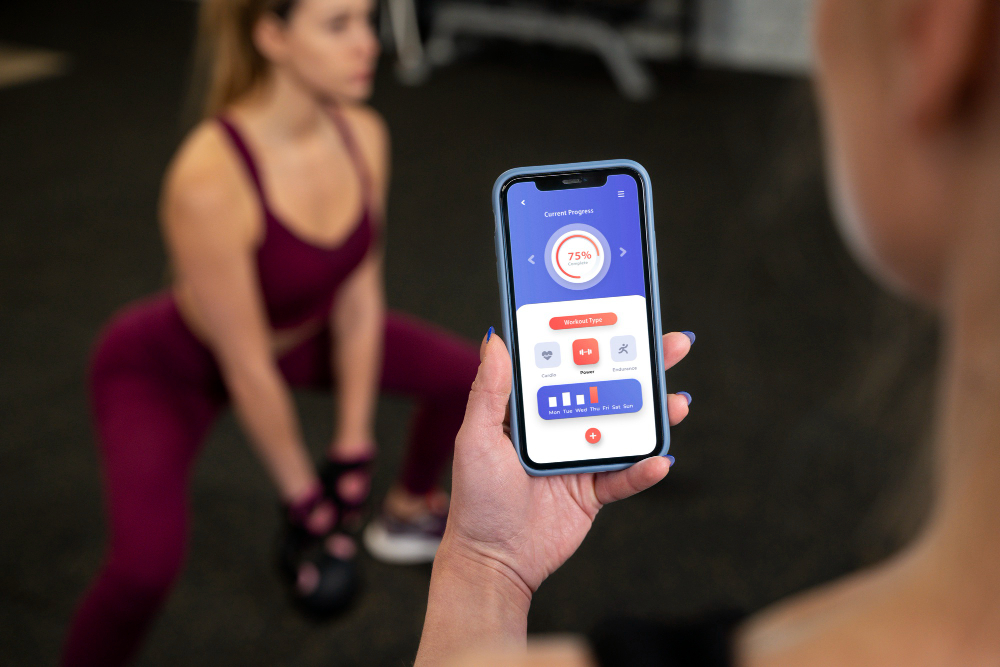
However, over a three-month period, the absolute difference is roughly two pounds. This was noted with caution by the researchers. Users’ interactions with the app were altered by the human coaches; they began to log meals almost twice as frequently, set more challenging goals, and track their weight more frequently. In other words, there was a real accountability effect. There was a slight but noticeable weight loss effect. The fact that women and older users benefited more than men and younger users suggests that the benefits of human coaching aren’t shared equally by all users.
In a different study, the eTRIP study, which was published in the Journal of Medical Internet Research, 230 participants with a mean BMI of roughly 29 participated in a week-long AI-assisted program in Southeast Asia. In addition to automated meal timing prompts and chatbot check-ins on eating triggers, the app used computer vision to recognize food items from photos. Overeating habits, snacking, self-regulation, depression scores, and physical activity levels all showed statistically significant improvements; additionally, the attrition rate during the seven days was only 8.4%, which is remarkably low for these kinds of studies. It did not, however, report significant weight loss. For that, seven days is insufficient. It demonstrated that the behavioral mechanisms—the mental habits related to eating—went in the right direction, which is where the majority of researchers now think the true issue lies.
It is more difficult to ignore the calorie estimation accuracy problem than the industry would like. In a test published in March 2026 by WIRED, a journalist used four apps at once to take pictures of the same meals: BitePal, Hoot, Lose It!, and MyFitnessPal. A Mediterranean bowl was estimated to contain about 1,000 calories by one app, but significantly more by another. According to registered dietitians cited in the article, all apps use standardized formulas to calculate each user’s caloric requirements, and these formulas are unable to take into consideration individual differences in hormonal profiles, bone density, or resting metabolic rates. This criticism is applicable to any tool that reduces human physiology to a formula, not just AI-powered apps. However, it’s important to consider when an app provides a precise and confident calorie target.
Looking through this research, it seems like AI weight loss tools have found a real niche instead of a panacea. Perhaps the most significant signal in the data is the MIT finding that users with lower levels of education and nutritional knowledge benefited most from AI guidance; this indicates a genuine chance to provide basic nutritional coaching to those who would not otherwise have access to it. The issues of long-term adherence, accuracy, and community have not been resolved. Clinically significant weight loss usually takes six to nine months to manifest, and there is little research on whether digital interventions last that long. The majority of studies demonstrating significant results span three to sixteen weeks. The applications are getting better. The body of evidence is growing. However, the difference between “solved the weight problem” and “statistically significant improvement over a control group in a three-week study” is still quite large, so it’s probably best to consider both at once.