



Listen to the article
A space rock the size of a big stadium will pass closer to Earth than some of our own satellites on the evening of April 13, 2029, which happens to be Friday the 13th. avoid colliding with it. Don’t touch it. Simply move through the narrow shell of space that we often consider to be our private neighborhood, silently and incredibly quickly. People with clear skies in Europe, Africa, and some parts of Asia will be able to see it moving across the sky with their unaided eyes for a few hours. With an asteroid this size, that has never occurred in human history. It’s worth taking a moment to consider that.
Depending on your mood, the asteroid Apophis—named for the Egyptian god of chaos—feels either poetic or overly dramatic. Early orbital calculations at the time of its discovery in 2004 indicated that there was a 2.7 percent chance that it would strike Earth during this same 2029 pass. Nearly instantly, telescopes all over the world swung toward it. The impact probability decreased to nearly zero as more information was gathered and the figures were improved. The early alarm, quick observation, and reassessment are actually how the system is meant to operate. The science was correct. However, the public’s discomfort persisted along with the name.
| Category | Details |
|---|---|
| Asteroid Name | 99942 Apophis |
| Size | Larger than the Eiffel Tower (~370 metres wide) |
| Closest Approach Date | April 13, 2029 |
| Distance from Earth at Closest Pass | ~32,000 km (about 20,000 miles) |
| Classification | Potentially Hazardous Asteroid (PHA) |
| Visibility | Naked eye visible during 2029 flyby |
| Probability of Earth Impact (2029) | Effectively 0% — confirmed safe pass |
| Asteroid 2024 YR4 Impact Risk (2032) | Revised down to 0.0017% for Earth; ~4.3% for the Moon |
| UN Designation | 2029 declared International Year of Planetary Defence |
| Dinosaur-Killer Size Class | ~10 km wide — estimated every 60–100 million years |
| DART Mission Result | Successfully altered Dimorphos asteroid orbit in 2022 |
| NASA Planetary Defence Budget | ~$150 million/year — under 1% of total NASA budget |
| Tunguska Event (1908) | Flattened ~750 square miles of Siberian forest |
| Chelyabinsk Impact (2013) | ~1,200 injuries, damage up to 55 miles away |
It’s difficult to ignore the disparities in how the public and scientists interpret this kind of data. A confirmed 32,000-kilometer miss is a relief that verges on celebration for a planetary astronomer. When most people read a headline about a “giant asteroid passing Earth,” the word “giant” is where the story ends. This gap has been turned into something of an industry by the tabloid press. There is hardly a week that passes without a headline announcing that NASA has discovered a “monster rock” on its way to Earth. You have to read the last paragraph to find out that it will miss by a few million miles. People either stop paying attention completely or experience reflexive panic after a certain number of those. Neither answer is very helpful.
Apophis isn’t the most fascinating asteroid story of the last year or two; rather, it’s a smaller rock known as 2024 YR4. It was significant enough to draw significant institutional attention when scientists initially calculated that it had a 3.1 percent chance of hitting Earth in 2032. Pay attention, not panic. Although it is now believed to be more likely to strike the Moon, with a 4.3 percent impact probability that would send hundreds of tonnes of debris in our direction, that probability was later reduced to about 0.0017 percent for Earth. The 2024 YR4 story serves as a helpful reminder that the monitoring systems are operational, that changes are made fast, and that the initial figure is rarely the final one.
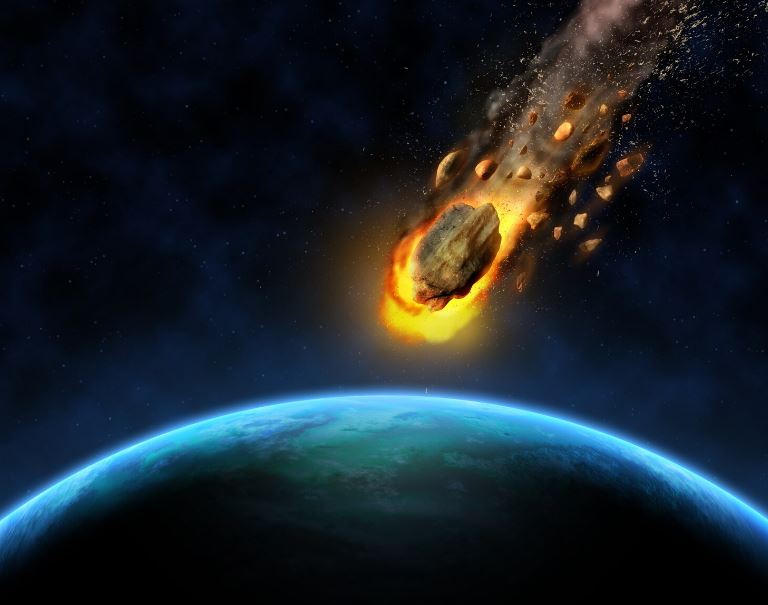
The possibility of a civilization-ending event is a real but statistically remote threat, with kilometer-wide impactors striking Earth approximately every million years. This is not what makes the asteroid question truly complex. It’s not as comforting as it might seem because the last one was around 900,000 years ago. The middle tier, which consists of space rocks big enough to destroy a city or cause regional destruction but small enough that we haven’t yet cataloged them all, is more urgent and less dramatic. According to NASA, an asteroid the size of a football field strikes Earth roughly every 2,000 years. One of these is thought to have been the 1908 Tunguska event over Siberia, which destroyed about 750 square miles of forest. Nobody anticipated it.
The good news is that, at least in theory, humanity has shown that it is capable of taking action against an approaching rock. In 2022, NASA’s DART mission successfully changed a spacecraft’s orbit around a larger companion body by slamming it into the small asteroid Dimorphos. The deflection method performed better than models predicted, and it was the first time it had ever been tested in actual space. That’s the kind of outcome that ought to attract more attention than it does. Lead time is the problem, as researchers are quick to point out. It may take years or even decades of warning for kinetic impactors, which are essentially fast cannonball spacecraft, to significantly deflect a massive asteroid. The main unresolved issue is still identifying the dangerous ones early enough.
Currently, NASA spends about $150 million annually on programs related to the detection of near-Earth objects. In comparison to the approximately $700 billion that the United States alone spends on conventional defense each year, that represents a rounding error and less than 1% of the agency’s overall budget. This funding disparity might be the result of a logical evaluation of the odds. The difficulty of persuading governments and the public to take seriously a threat that operates on timescales longer than an election cycle may also be reflected in this. It is possible for both to be true at the same time.
Observing the advancement of this field gives me the impression that humanity is gradually gaining the means to address an issue that it has largely disregarded. The networks of telescopes are getting better. The number of detection catalogs is increasing. The DART result demonstrated that deflection is real. At the very least, the UN’s designation of 2029 as the International Year of Planetary Defense shows that organizations are paying attention to the issue. Four years from now, Apophis will be visible to anyone standing outside in the correct part of the world as it glides past in the early morning sky. It will serve as an odd and striking reminder that space is not empty and that orbital mechanics, which reward close attention, determine the distance between a near-miss and something else entirely. Unfortunately, the question of whether that attention is being sufficiently funded remains unanswered.