

Listen to the article
Images of Mars swirling in rust-colored clouds fill the lobby screens of the Mohammed Bin Rashid Space Centre in Dubai. School groups cringe as they shuffle by. Pride is still present in the room because the Hope probe’s 2021 arrival at Mars is still fresh in people’s minds. However, discussions within the glass offices have moved toward a planet that was once thought to be too dangerous to approach—the Sun.
Venus and, more intriguingly, the lava tunnels thought to run beneath its volcanic plains are the targets of Dubai’s next interplanetary ambition. The possibility that these cavernous formations, which were sculpted by ancient flows of molten rock, could reveal information about the evolution of planets is being investigated by planetary scientists and engineers. Such tunnels, protected from intense heat and radiation, might be able to preserve geological records that Venus’ harsh surface conditions would otherwise destroy.
| Category | Details |
|---|---|
| Mission Authority | Mohammed Bin Rashid Space Centre (MBRSC), UAE Space Agency |
| Proposed Target | Venus orbit & subsurface lava tunnels; asteroid belt exploration |
| Planned Launch Window | 2028 (development underway) |
| Journey Distance | ~3.6 billion km |
| Key Objectives | Study Venus atmosphere & geology; investigate lava tube formations; explore asteroids; technology development |
| Partner Institutions | Laboratory for Atmospheric and Space Physics (University of Colorado Boulder) |
| Predecessor Mission | Emirates Mars Mission (Hope Probe, 2021) |
| Significance | Would expand Arab world’s deep-space exploration capabilities |
| Environmental Challenge | Venus surface ~475°C; pressure ~90× Earth’s |
| Reference | https://www.mbrsc.ae |
Using gravity aids to increase speed, the proposed mission would circle Venus before moving farther into the solar system. The trajectory itself, which circles Venus, swings past Earth, and then speeds toward the asteroid belt, sounds like a live physics lecture. In contrast, the challenge is less abstract inside the control rooms. One engineer recently described thermal protection design as “like building an oven that must survive inside a bigger oven,” an image that lingers.
Venus is not an uncharted planet. Spacecraft from the United States, Europe, and Japan have mapped its atmosphere and terrain, and Soviet landers arrived on its surface decades ago. Still, the planet remains stubbornly mysterious. Direct observation is obstructed by dense sulfuric clouds. Lead can melt at surface temperatures close to 475°C. Air pressure crushes like the deep ocean. In the past, landing gear has only lasted a few minutes.
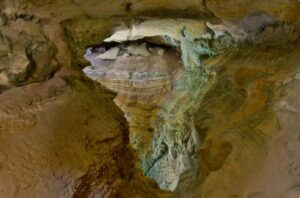
Scientists are fascinated by lava tunnels precisely because of their brutality. These tunnels, which were formed when molten rock solidified on the outside while liquid lava flowed underneath, might provide comparatively stable conditions. Such formations can be found in Iceland and Hawaii on Earth. They could go on for kilometers on Venus. They seem to be time capsules from a planet that was younger.
Dubai’s fascination with these formations is consistent with a larger trend. The UAE is known for its bold projects that serve as national statements, such as the tallest tower in the world, man-made islands, and a six-year-old Mars probe. By fostering local engineering talent and establishing the nation as a technological center, space exploration has evolved into both a scientific endeavor and an economic strategy.
Partnerships are still essential. The Laboratory for Atmospheric and Space Physics at the University of Colorado Boulder, which assisted in training Emirati engineers for the Mars mission, is anticipated to contribute expertise to the mission. As one strolls around the MBRSC facilities, one observes young teams switching between hardware prototypes and simulation models while conversing in a mix of Arabic and English. It feels more like an apprenticeship than a spectacle.
The technical hurdles, however, are daunting. Later parts of the journey push systems into deep cold and low solar energy, while Venus flybys bring spacecraft closer to the Sun, subjecting instruments to extreme thermal stress. Insulation that can withstand both extremes must be designed by engineers. Whether future probes could safely descend toward tunnel entrances or rely only on thermal imaging and radar from orbit is still unknown.
After passing Venus, the spacecraft would proceed in the direction of the asteroid belt, observing several objects before making an attempt to land on one. As remnants of the solar system’s formation, asteroids serve as scientific archives. Though these predictions are still theoretical, some researchers also see them as potential resource repositories.
It’s difficult to overlook the symbolism as you watch this play out. A desert nation making significant investments in planetary science points to a change in the way influence is quantified, with knowledge and technological reach being more important than territory. Instead of being a far-off dream, space engineering is now viewed by Dubai’s students as a local career.
An undercurrent of uncertainty is also present. Missions to Venus are notoriously challenging. Budgets are stretched. Timelines are prone to slipping. Even hopeful scientists acknowledge that there may be more questions than answers when it comes to studying lava tunnels from orbit. However, the appeal appears to include that ambiguity.
For the time being, Dubai’s screens are still playing Mars footage. However, in the conference rooms behind them, teams are drafting a future mission that could test the limits of a fledgling space program by peering into the secret underworld of Earth’s most hostile neighbor.