




Listen to the article
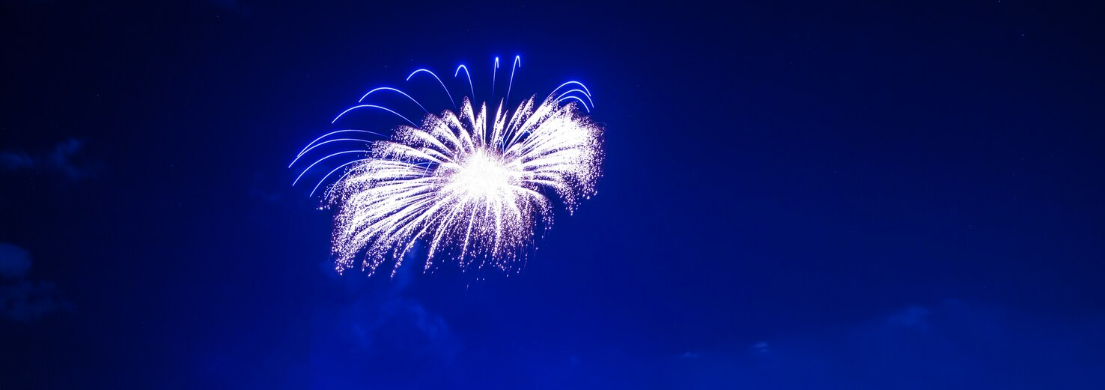
When the sky sharpens into a field of hard, glittering stars and the horizon fades into ink, the desert night outside of Sharjah can have an almost theatrical quality. Astronomers observing that sky one evening recently saw something out of place: a brief, electric blue flare that was bright at first but then abruptly fragile, like a spark that had burned too quickly.
Regional observatories collaborating with the International Astronomical Centre captured the observation, which is thought to be a fast blue optical burst, a rare and little-understood cosmic event. These sudden outbursts, also known as LFBOTs, disappear in a matter of days, leaving more questions than answers. Astronomers have a feeling that every discovery is like catching lightning in a bottle.
| Category | Details |
|---|---|
| Observatory | Sharjah Observatory / UAE astronomical research facilities |
| Related Facility | Al Khatim Astronomical Observatory |
| Parent Organization | International Astronomical Centre |
| Phenomenon Observed | Fast Blue Optical Burst (LFBOT) |
| Telescope Used | 14-inch optical telescope |
| Observation Method | Rapid photometry & multi-filter analysis |
| Filters Used | Blue, green, near-infrared |
| First Magnitude Reading | 17.22 |
| Second Reading | 17.45 (rapid fading) |
| Possible Origin | Stellar explosion, compact object merger, or unknown astrophysical process |
| Reference | https://astronomycenter.net |
Researchers monitored the object’s brightness changes over incredibly brief periods of time using rapid photometry techniques. Within a day, the blue wavelength measurement dropped from its starting magnitude of 17.22, which was already low by human standards, to 17.45. Although that decrease might not seem like much, astronomically speaking, it indicates a sharp drop in luminosity, which is in line with how short these bursts are.
The work is quiet and meticulous inside the observatory. The screens are glowing. Filters turn. The telescope uses mechanical patience to pivot. Sand is pushed up against concrete walls by the desert wind outside. One can picture the mix of excitement and restraint as they watch the data update in real time—scientists are taught to avoid making snap judgments, even when faced with unusual information.
The team used blue, green, and near-infrared filters to observe the burst in order to comprehend the behavior of the event. By using multiple wavelengths, astronomers are able to create what is known as a light profile, which shows how energy is distributed throughout the spectrum. Though certainty is still elusive, it’s possible that patterns concealed in these profiles will eventually reveal the causes of such events.
Since the initial verified observation less than ten years ago, fast blue optical bursts have baffled scientists. Unusual stellar explosions are thought to be connected to them. Others suspect exotic astrophysical processes that have not yet been fully described or mergers of compact objects. It is still unknown if all LFBOTs have a common origin or if they are a group of distinct cosmic disasters that only appear to be similar from Earth.
In addition to NASA’s orbiting telescopes’ warnings, ground-based observatories in the Gulf region have started to play an increasingly important role in transient-event research. In the past, UAE observatories have captured afterglows from stellar explosions billions of light-years away in a matter of minutes after receiving gamma-ray alerts. Speed is important because these phenomena change swiftly and occasionally disappear before larger facilities can move their equipment.
It feels subtly symbolic to watch this unfold from an area more frequently linked to the heat of the desert than to deep space exploration. There is a sense that the night sky above the Arabian Peninsula is turning into a laboratory rather than a backdrop because of the UAE’s significant investments in space science, which include everything from asteroid research to Mars missions.
Skepticism is still a component of the scientific temperament, though. One observation doesn’t provide answers; it adds data. Every burst both confirms and challenges accepted theories. These kinds of discoveries appear to boost regional scientific credibility, according to investors in space science and research infrastructure, but the real benefit might not be headline moments but rather decades of accumulated knowledge.
The actual blue flash didn’t last long. Its afterglow, however, may last for years in scientific archives after being measured, examined, and discussed. The light of a violent event that occurred millions or billions of years ago somewhere in a distant galaxy is just now sweeping past Earth. It’s difficult to ignore how much of the universe is late, fragmented, and subject to interpretation when standing beneath the serene Sharjah sky. And maybe the appeal lies in that uncertainty.