




Listen to the article
The IISc press release contains a sentence that is subtle but worth considering. “It is amazing that there is so much to do on just a single layer of graphene even after 20 years of discovery.” That’s Arindam Ghosh, one of the physicists who contributed to the recent paper published in Nature Physics, sounding slightly amused by the content that earned Andre Geim and Konstantin Novoselov a 2010 Nobel Prize. After twenty-two years, graphene continues to reveal secrets. It’s a good one.
Electrons don’t really flow the way people think they do in common metals like the copper in your walls and the aluminum in a soda can. They dart around. They lose momentum almost continuously, bounce off microscopic impurities, and collide with vibrating atoms. According to UC Boulder theoretical physicist Andrew Lucas, the process involves electrons acting like pinballs, thudding instead of gliding. In order to pass eighth-grade science, we always told ourselves the convenient lie that electricity was a smooth river. Molecules of water move in unison. Almost all of the materials we have ever worked with do not contain electrons.
| Lead Institution | Indian Institute of Science (IISc), Bangalore |
| Collaborating Institution | National Institute for Materials Science, Japan |
| Department | Department of Physics, IISc |
| Principal Investigator | Prof. Arindam Ghosh |
| First Author | Aniket Majumdar, PhD student |
| Material Studied | Ultraclean graphene (single-layer carbon) |
| Exotic State Observed | Dirac fluid |
| Law Challenged | Wiedemann-Franz law (a foundational principle of metallic conduction) |
| Observed Deviation | More than 200 times at low temperatures |
| Analog in High-Energy Physics | Quark-gluon plasma, as studied at CERN |
| Published In | Nature Physics, 2025; Vol. 21, Issue 9, Page 1374 |
| DOI | 10.1038/s41567-025-02972-z |
| Announcement Date | April 15, 2026 |
| Potential Applications | Highly sensitive quantum sensors, faint magnetic field detection, black-hole thermodynamics research |
This is why the new Bangalore-based work is so unusual. The IISc team observed the separation of two properties that are typically bound together by a 170-year-old principle known as the Wiedemann-Franz law by cooling an exceptionally pure sheet of graphene and closely monitoring how it conducts heat and electricity. And not in a subtle way. At low temperatures, by more than 200 times. You can’t ignore that deviation. Heat and electrical conduction in metals should move proportionately, according to the law. The graphene consistently and firmly stated otherwise, in a way that needed to be explained by a different framework.
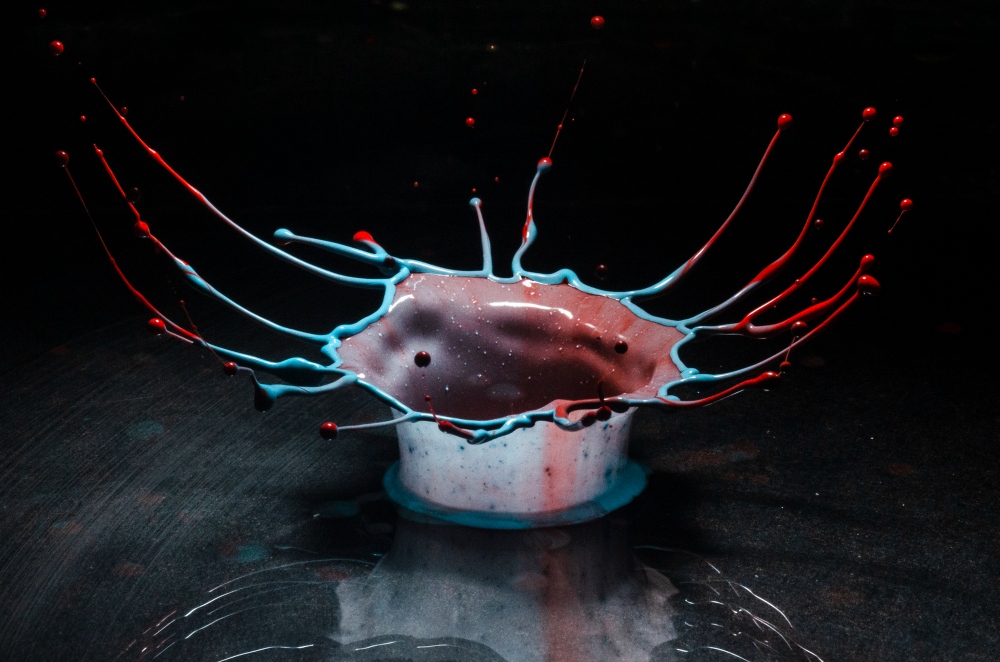
The Dirac fluid is the framework they aimed for. Electrons stop behaving like individual particles and begin acting collectively close to what physicists refer to as the Dirac point, a particular point in graphene where the material lies on the border between being a metal and an insulator. They move. In the literal, hydrodynamic sense that water flows, not in the loose metaphorical sense. The viscosity that the IISc team measured was incredibly low, making it one of the closest examples of a “perfect fluid” that anyone has ever seen. The quark-gluon plasma, the superheated soup of subatomic particles that physicists briefly create inside the particle accelerators at CERN, is the analogy that frequently appears in the literature and is directly used by the paper’s first author, Aniket Majumdar. That same exotic state, but with carbon in a tabletop experiment.
It’s difficult to avoid feeling as though the outcome is at the conclusion of a protracted and somewhat obstinate research thread. In 1963, Soviet physicist Radii Gurzhi developed the theoretical behavior, claiming that electrons could, in certain circumstances, share momentum like water molecules do rather than losing it to impurities. Since real-world wires were too dirty to ever demonstrate the effect, the prediction was largely disregarded for fifty years as a charming oddity with no practical significance. Next was graphene. The Poiseuille profile of electron flow was first imaged in 2019 thanks to a partnership between Weizmann and Manchester. Then, in 2022, the MIT electron whirlpools. Then last fall, Cory Dean’s shock-wave demonstration at Columbia. With each step, the Gurzhi prediction moved closer to becoming something tangible, observable, and real rather than just a theoretical curiosity.
The accuracy with which they have determined the behavior’s universality is what makes the IISc result novel. The Dirac fluid’s thermal and electrical conductivity follow a universal constant linked to the quantum of conductance, which is independent of the material. That’s the kind of discovery that alters a theorist’s desk routine. It implies that matter follows deeper rules close to these critical quantum points, which transcend traditional materials science and enter areas typically associated with particle physics and astrophysics. “Universality in quantum critical flow of charge and heat in ultraclean graphene” is the title of a paper that does more than most.
Reading the coverage gives me the impression that this is one of those discoveries whose philosophical implications are immediate but whose practical implications will take ten years or longer to fully understand. Graphene has subtly developed into a lab where scientists can test theories about quark-gluon plasma, entanglement entropy, and black holes without ever leaving the building. That in and of itself is odd. It is more speculative on the applied side. Quantum sensors that detect magnetic fields too subtle for existing instruments to detect or amplify weak electrical signals could be made possible by Dirac fluids. For years, businesses like IBM and Intel have been considering graphene-based electronics, but so far there hasn’t been much commercial success. It’s still unclear if this new knowledge of hydrodynamic electron flow speeds up that timeline or just improves our comprehension of why the existing timeline keeps slipping.
It is evident how uncommon it is in 2026 to witness a fundamental law of physics bent so neatly by a single-layer material that emerged from the earth and was, as Cory Dean once described it, “well formed, with very few impurities.” In 1853, the Wiedemann-Franz law was first put forth. It endured the quantum revolution, the discovery of electrons, the development of the transistor, and an entire semiconductor physics industry based on its presumptions. Under the correct circumstances, it did not endure graphene. That is both slightly thrilling and somewhat humble. The universe never ceases to surprise us with things we thought we understood.