




Listen to the article
The choice had already been made on a warm Washington night long after the majority of federal buildings had been darkened. Jets were in the air a few hours later. Cruise missiles came next. By daybreak in Tehran, smoke was rising from missile depots and military installations, and everyone was wondering why the US had attacked Iran.
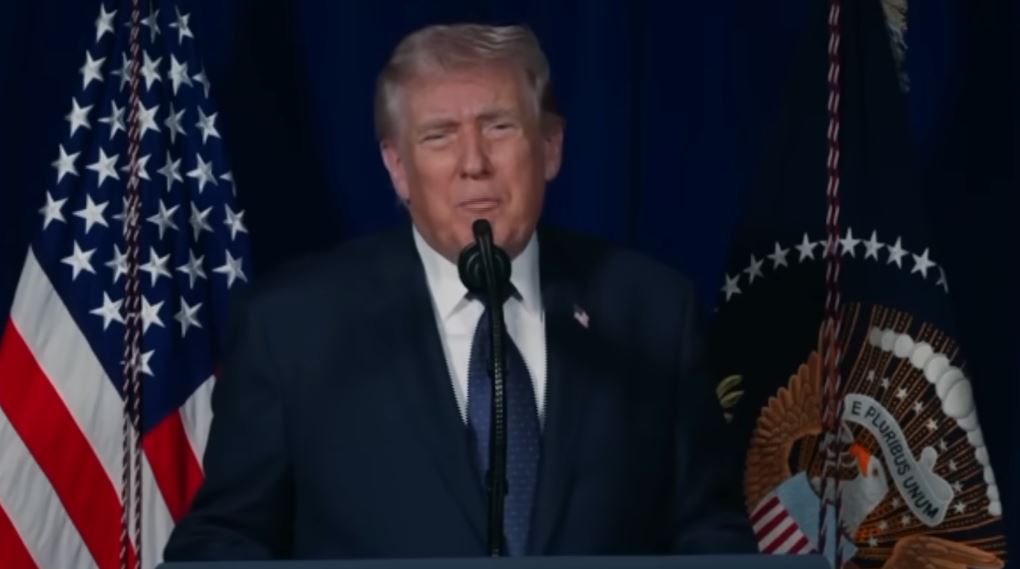
The answer was obvious on paper. The goal, according to President Donald Trump, is to make sure Iran “does not obtain a nuclear weapon.” He talked about crippling Iran’s security apparatus and destroying missile capabilities in public statements. It was presented by the Pentagon as preventative self-defense. Reiterating the existential threat narrative, Israeli leaders contended that Tehran’s enrichment program had gone too far.
| Category | Details |
|---|---|
| Country | United States |
| Target | Iran |
| Operation Name | Operation Epic Fury |
| Key Figure | Donald Trump |
| Primary Justification | Prevent Iran from obtaining nuclear weapons |
| Reference | https://www.bbc.com |
However, wars rarely start for a single cause. The Geneva negotiations had been dragging on for weeks. According to reports, American diplomats pushed for a ten-year ban on uranium enrichment. Iran objected, claiming that its nuclear program was peaceful. In private, officials became more and more gloomy. Washington might have decided that diplomacy had run its course.
This shows a pattern. Pressure increases when negotiations falter and trust is lost. It built quickly in this instance.
Reporters pressed for clarification inside the White House briefing chamber. Was evidence of weaponization imminent? Iran was still years away from developing a deployable intercontinental missile, according to intelligence assessments. The administration countered that the window was closing. They implied that waiting was riskier than taking action.
It’s difficult to ignore the seriousness of that calculation when you watch the initial footage from Tehran, which shows apartment buildings trembling and emergency personnel racing toward destroyed compounds.
The strikes had no symbolic meaning. They went after senior figures in Iran’s military leadership, missile factories, and naval installations. The first wave struck the compound of Ayatollah Ali Khamenei. “Operation Epic Fury” proceeded more quickly than many had anticipated.
It is viewed by some detractors as a calculated risk. Advocates say it’s long overdue.
Additionally, there is a regional layer. In recent months, militias supported by Iran have increased their attacks on Israeli targets and U.S. positions. From Lebanon came rockets. Drones were launched in the direction of Gulf states. harassed oil tankers in the Hormuz Strait. The pattern indicated that escalation was already in progress for Washington.
The administration might have thought it was picking a battleground instead of waiting to be dragged into one.
The energy markets responded right away. The price of oil surged. As insurance companies reevaluated risk, shipping through the Strait slowed. Residents of Doha and Dubai gazed up at the sky, where they saw lines of intercepted missiles. The fighting did not stay on Iranian territory.
Iran reacted quickly, attacking Israel and Gulf states that house American bases with ballistic missiles and drones. The shockwaves affected civilian infrastructure, including hotels, embassies, and airports. It was confirmed that six American service members had died. Eighteen suffered severe injuries. Escalation’s cost became apparent.
Back in Texas, voters in line at polling places discussed the strike in private. Some people trusted the president’s gut. Congress’s authorization was questioned by others. There is a perception that consensus is brittle, even within the United States.
The nuclear issue is still crucial. Washington has set a red line around Iran obtaining nuclear weapons for decades. Pressure has been constant, ranging from cyberattacks to sanctions. The 2015 nuclear agreement provided short-term respite before collapsing. Enrichment levels have increased since then.
Uncertainty still persists. Was Iran really in danger? Or was this about reestablishing credibility following years of proxy conflicts, or was it about deterrence?
It’s still unclear if the strike was intended to undermine the larger regime or just stop nuclear progress. After operations ended, President Trump urged Iranians to “take over your government.” Benjamin Netanyahu, the prime minister of Israel, presented the move as opening the door for democratic transformation. Such language suggests aspirations that go beyond centrifuges. Here, history casts a long shadow.
Iraq was invaded by the United States in 2003 on suspicion of having WMDs. Today’s skepticism is shaped by that memory. Analysts warn against confusing intent with capability. However, policymakers contend that it can be disastrous to wait for evidence. Preemption and caution are at odds as we watch this play out.
The campaign may run for four to five weeks, according to the administration. That chronology seems both accurate and ambiguous. Schedules are rarely followed in wars. The Revolutionary Guard of Iran continues to control missile arsenals. Proxy forces are still in operation. Repeated salvos are taxing Gulf air defenses.
Washington might have thought that using decisive force would end the war sooner. It’s also possible that the strikes have sparked a larger conflict in the region.
The United States attacked Iran; why? because it felt that the danger of escalation was outweighed by the danger of inaction. due to the breakdown of negotiations. because solidarity was demanded by allies. Because it can be difficult to reestablish deterrence without making dramatic gestures once it has been questioned.
What happens next will determine how wise that calculation turns out to be.
Those who support it will describe it as strategic foresight if nuclear facilities are decommissioned and regional attacks stop. Critics will claim that the risk was too high if oil prices skyrocket, civilian casualties increase, and proxy conflicts worsen.
As of right now, warships patrol the Gulf with anxiety, and smoke still hangs over parts of Tehran. The explanations have been given. The repercussions are still being felt.